

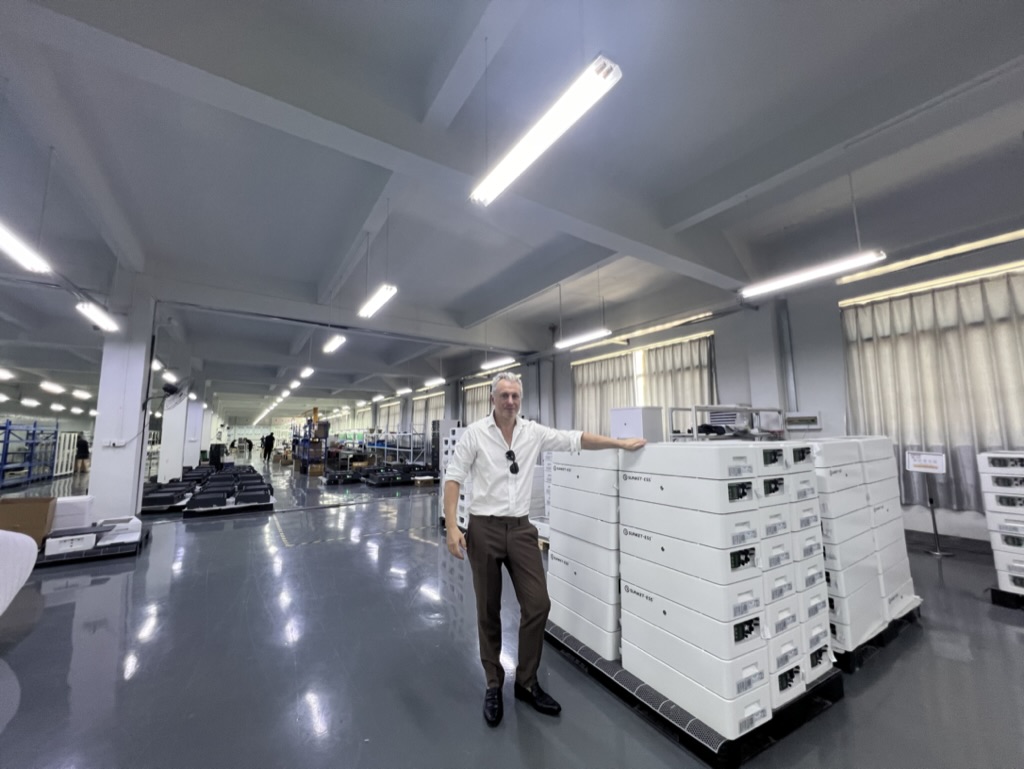
Home storage changes the value of rooftop solar by allowing some daytime surplus to be used later, when household demand may be higher. For energy businesses and installers, the opportunity is not to promise that a home can leave the grid, but to design a system that improves control over energy use and cost. In August 2024, the value remained household-specific, depending on demand patterns, tariffs, system design and equipment support.
Solar generation and domestic demand do not always coincide. A battery can store some surplus and discharge it later, increasing the share of solar electricity used on site and reducing purchases from an external supplier. This may suit homes whose consumption rises in the morning or evening. Batteries also have conversion losses and operating limits, so not all generated power will be stored or consumed locally. Value should be assessed against actual import and export arrangements, not inferred from annual generation alone.
Greater self-consumption is not energy independence. The grid remains important in winter, extended low-sun periods and times when demand exceeds solar output or available battery energy. Backup capability, if required, needs explicit design and compatible equipment. A standard grid-connected installation should not be represented as providing backup during an outage. Clear explanation protects customer confidence and keeps the sales proposition aligned with the system supplied.
Controls determine how storage serves household priorities. A system may prioritise immediate demand, charge from solar surplus, retain a reserve for backup or charge from the grid when a time-of-use tariff makes that worthwhile, then discharge during higher-price periods. The suitable mode depends on tariffs, export payments, array output, battery limits and customer preferences. Sophisticated control alone does not guarantee lower bills; projected savings should state assumptions about imported, exported and shifted electricity.
Financial assessment should cover the complete installed system, not the battery price alone. Consider seasonal solar output, consumption by time, system cost, financing, electricity prices, export arrangements, applicable grants or incentives and expected cycling. Payback varies with these factors. An oversized battery may remain underused and lengthen recovery; too little capacity may not shift the energy the customer intended. Illustrative scenarios must be labelled as examples, not promises of savings or payback.
Sizing should begin with household data, not a standard package. Interval or smart-meter records, where available, can show when electricity is used and how demand persists after sunset. Compare this with seasonal generation. Usable capacity, depth of discharge, round-trip efficiency, power rating, degradation and inverter limits affect what the system can move. The aim is productive use on realistic days while retaining any reserve selected for backup or other priorities.
Product selection extends beyond capacity and price. Cell quality, battery-management software, electrical protection, thermal behaviour, installation conditions, monitoring and commissioning matter in a home. Confirm inverter and battery compatibility for the intended operating mode and follow manufacturer installation requirements. Documentation, relevant product certification and accessible technical support reduce uncertainty. Warranty terms, exclusions, performance conditions, claim procedures and the responsible entity also need review. Ask how faults are diagnosed, what records are needed, whether spares are available and who supports commissioning. Retain serial numbers, settings and handover records.
Installers face commercial risks as well as technical ones. Unavailable, incompatible or difficult-to-troubleshoot equipment can mean extra visits, delayed completion and dissatisfied customers, affecting margins and crew capacity. An approved product range can simplify training and service; too narrow a range may increase exposure to shortages or product changes. A focused catalogue with technically assessed alternatives balances standardisation and resilience.
A practical review asks what the customer wants—self-consumption, tariff shifting or backup; what demand and generation data show by time and season; whether usable capacity fits that profile; and whether the inverter, battery and controls are compatible. Confirm that savings assumptions are transparent, installation and support needs are understood, and responsibilities for faults, replacement and warranty are clear. Put the answers in the design, quotation and handover, not only in a sales conversation.
OGMA maintains a supplier database covering residential, commercial, industrial and utility-scale storage providers and a range of price points. Assessment considers manufacturing capability, certification, operating evidence, warranty, financial strength, documentation, spare parts and after-sales service. This can help installers and developers compare options when specifications or delivery schedules change; it does not replace system design, installation competence or review of the terms for a specific product.
The strategic opportunity is to make storage a dependable service proposition rather than an add-on to a solar quote. Household control improves when sizing reflects real demand, operating limits and tariffs are explained honestly, and equipment remains supportable after commissioning. Disciplined selection and transparent modelling protect installer trust and repeatable delivery. The useful outcome is a system suited to the household’s priorities, not a broad claim of independence the design cannot substantiate.


0 Comments