

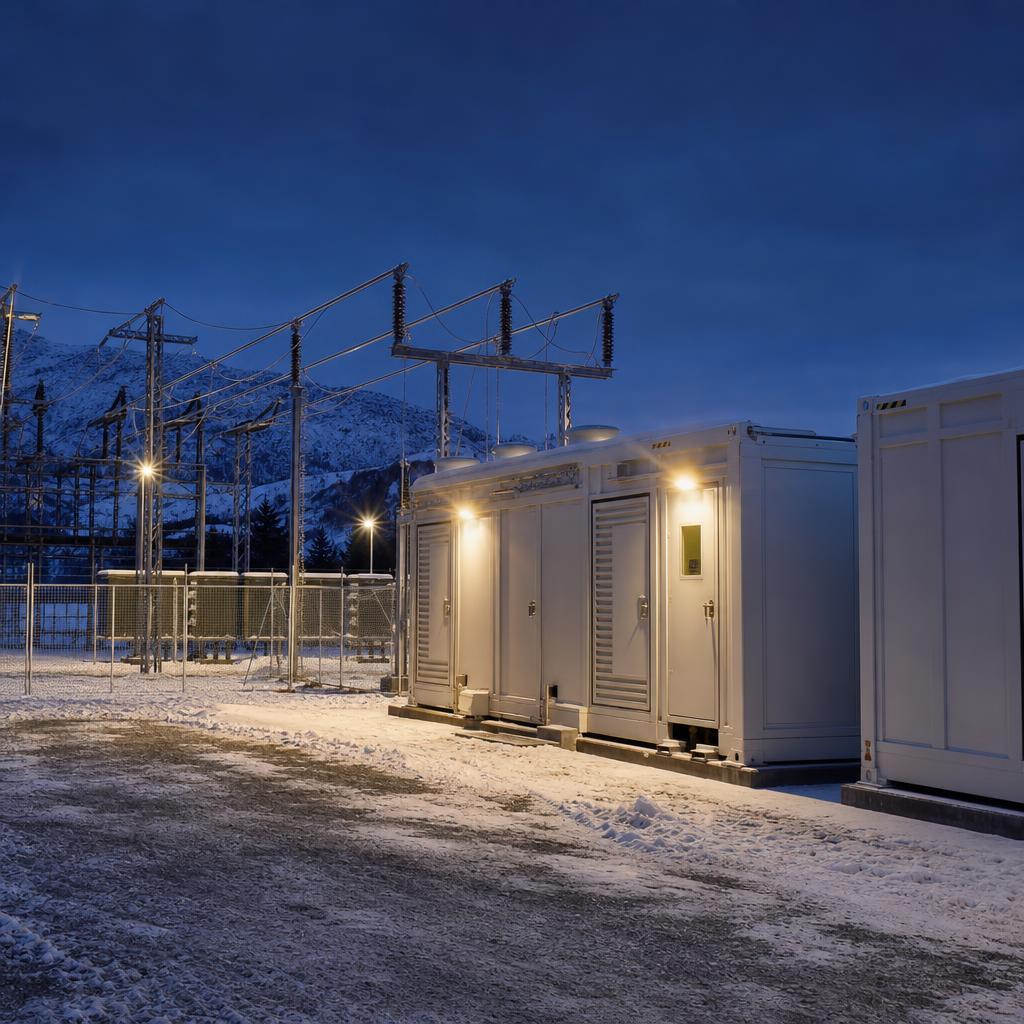
European winter trading exposes a simple commercial truth about battery energy storage systems (BESS): revenue depends on an asset behaving within its technical limits, while the warranty depends on precisely how those limits are defined. Low temperatures, changing dispatch patterns and performance expectations make efficiency, availability, thermal controls and service response more than technical footnotes. Owners should test the operating strategy against the warranty and the evidence available to demonstrate performance before relying on a revenue case.
Round-trip efficiency is often presented as a single percentage, but its meaning depends on the measurement boundary and operating conditions. Does the calculation include auxiliary consumption, conversion losses, transformer losses and standby demand? Is energy measured at the battery terminals, power conversion system or point of connection? At what charge and discharge rates, state-of-charge range and temperature was the result established? If the owner, integrator and optimiser use different boundaries, forecast revenues and warranty performance may not be comparable.
Availability also needs a precise definition. A system may be technically capable of operating but unavailable for a particular market instruction, or some capacity may be available while another portion is offline. Contract language should specify the measurement interval, excluded events, planned maintenance treatment, telemetry requirements and the data source used to calculate availability. Owners should check that the definition aligns with the services the asset intends to provide; an attractive percentage is of limited value if it does not describe the capacity the business can actually offer.
Warranty limits are especially important when dispatch is flexible. Cycle counts, energy throughput, depth of discharge, state-of-charge windows, temperature, charge and discharge power, and time at particular operating conditions may affect the coverage or guaranteed capacity. The project team should map the optimiser’s intended strategy against those limits. If a trading model assumes frequent cycling or aggressive use, while the warranty assumes a narrower profile, the gap is a commercial exposure that should be resolved before operations begin.
Thermal management links system design to operating cost. Heating or cooling may consume energy, affect net output and contribute to auxiliary load; under some conditions it may be necessary to maintain performance within a specified operating envelope. The design review should consider control behaviour, redundancy, monitoring, alarms, maintenance and what happens if a thermal subsystem fails. Owners need to understand which readings are available remotely, who reviews deviations and what action follows an alarm. Performance should be assessed net of the energy needed to keep the battery within its intended conditions.
Contract design should bring supplier, integrator, optimiser and asset owner onto a shared set of assumptions. The EPC or integrator may be responsible for system integration and acceptance testing; the OEM for specified equipment and warranty obligations; the optimiser for dispatch decisions and market participation; and the owner for operating decisions, maintenance or data access. Actual responsibilities vary by contract. A responsibility matrix can reveal gaps, such as unclear ownership of root-cause analysis when underperformance involves both controls and equipment.
The data model is central to resolving those questions. Parties should agree what data will be recorded, at what granularity, who may access it, how it is retained and which records govern performance claims. Relevant information can include power and energy, state of charge, temperatures, alarms, availability events, control instructions, meter values and maintenance activity. Data completeness and time synchronisation matter: without reliable records, it may be difficult to distinguish equipment limitation, dispatch choices, grid constraints or an external interruption.
A pre-operation checklist should ask whether the warranty conditions match the dispatch plan; efficiency and availability boundaries are defined; cold-weather operating assumptions are supported by project evidence; thermal alarms and service response have named owners; augmentation assumptions have funding and integration plans; and data access is sufficient to evidence performance. Each item should be closed through a contract, approved design, test procedure or operating process. Unresolved points belong in a tracked risk register, not in an informal understanding between commercial teams.
There are legitimate trade-offs. More conservative dispatch can preserve warranty headroom and reduce degradation exposure, but may forgo revenue opportunities. Greater utilisation may increase throughput and increase the value extracted from the asset, while elevating wear, thermal demand or the risk of crossing contractual limits. A larger thermal-management provision may support operation but add capital and auxiliary consumption. These choices should be compared against the project’s revenue strategy and lifecycle economics, not resolved by treating either maximum utilisation or minimum cycling as universally best.
The most defensible BESS commercial model is built jointly from operating data, technical limits and enforceable responsibilities. OGMA’s supported relevance is in helping project teams assess suppliers, coordinate technical documentation and align equipment procurement with real operating requirements; it does not replace specialist warranty, market or engineering advice. For European winter trading, the key executive action is to demand consistency: the dispatch assumptions used to value the asset must match the system that is supplied, the warranty that is offered and the data that will be available to prove performance.



0 Comments