

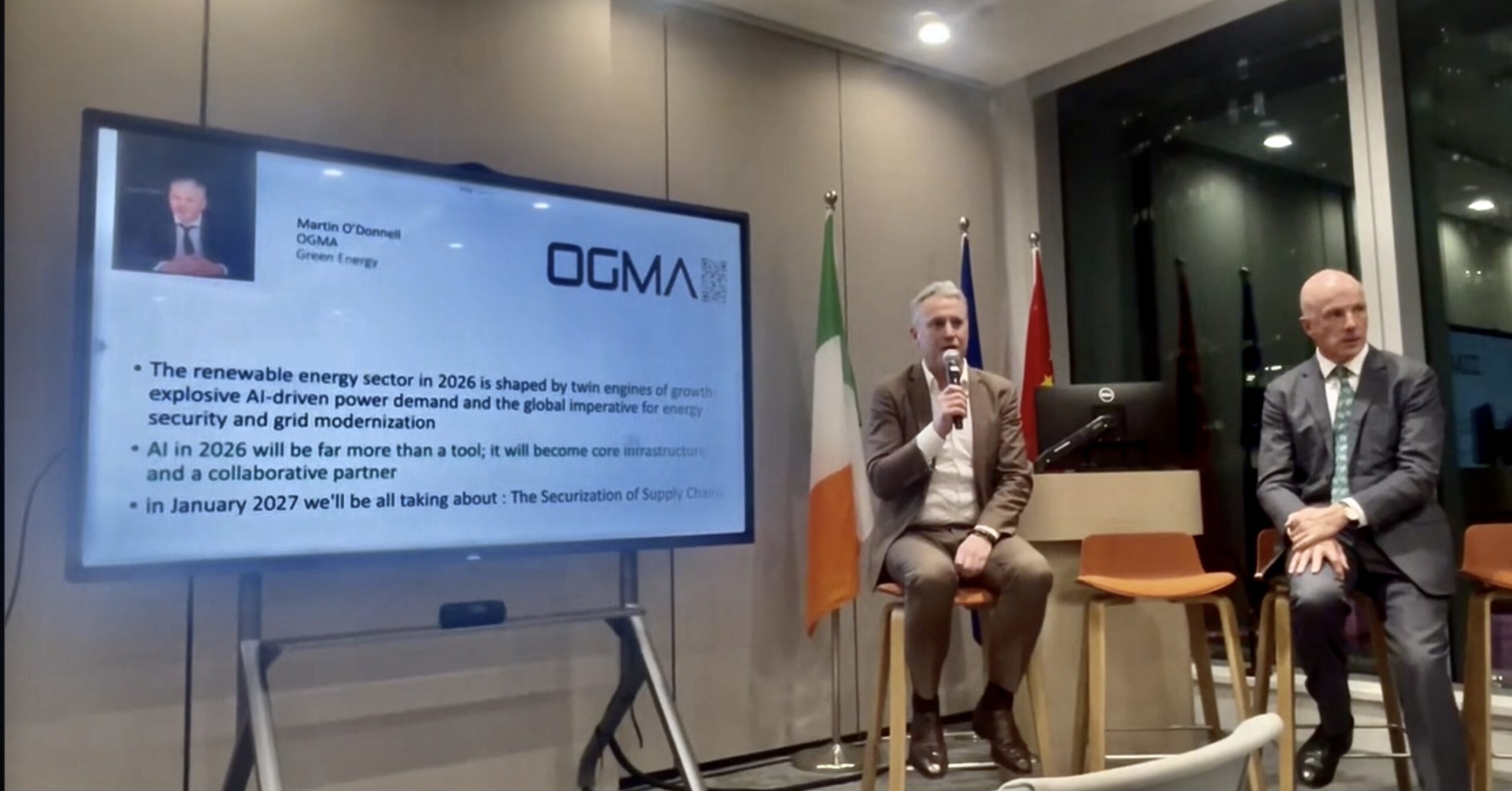
At the Irish Chamber of Commerce in Shanghai in January 2026, OGMA CEO Martin O’Donnell presented on renewable energy as a foundation of the AI economy. The event considered AI’s industrial uses; his central point was that expansion depends on secure, affordable and increasingly renewable electricity. Data centres, factories, logistics networks and digital platforms all rely on energy infrastructure whose capacity, reliability and carbon profile are strategic business issues.
AI data centres need dependable round-the-clock power, sufficient capacity, quality and resilience for high-density computing, and a credible route to lower-carbon electricity. The presentation highlighted Ireland’s CRU policy for qualifying new data-centre connections: at least 80% of annual demand must be met by additional renewable electricity projects generating in the Republic of Ireland, with a six-year glide path for that generation to be developed and begin operating. It applies to new data-centre connections, not AI facilities alone, but is relevant to AI infrastructure growth. Sponsors should establish the requirements applying to a specific connection rather than rely on a general policy description.
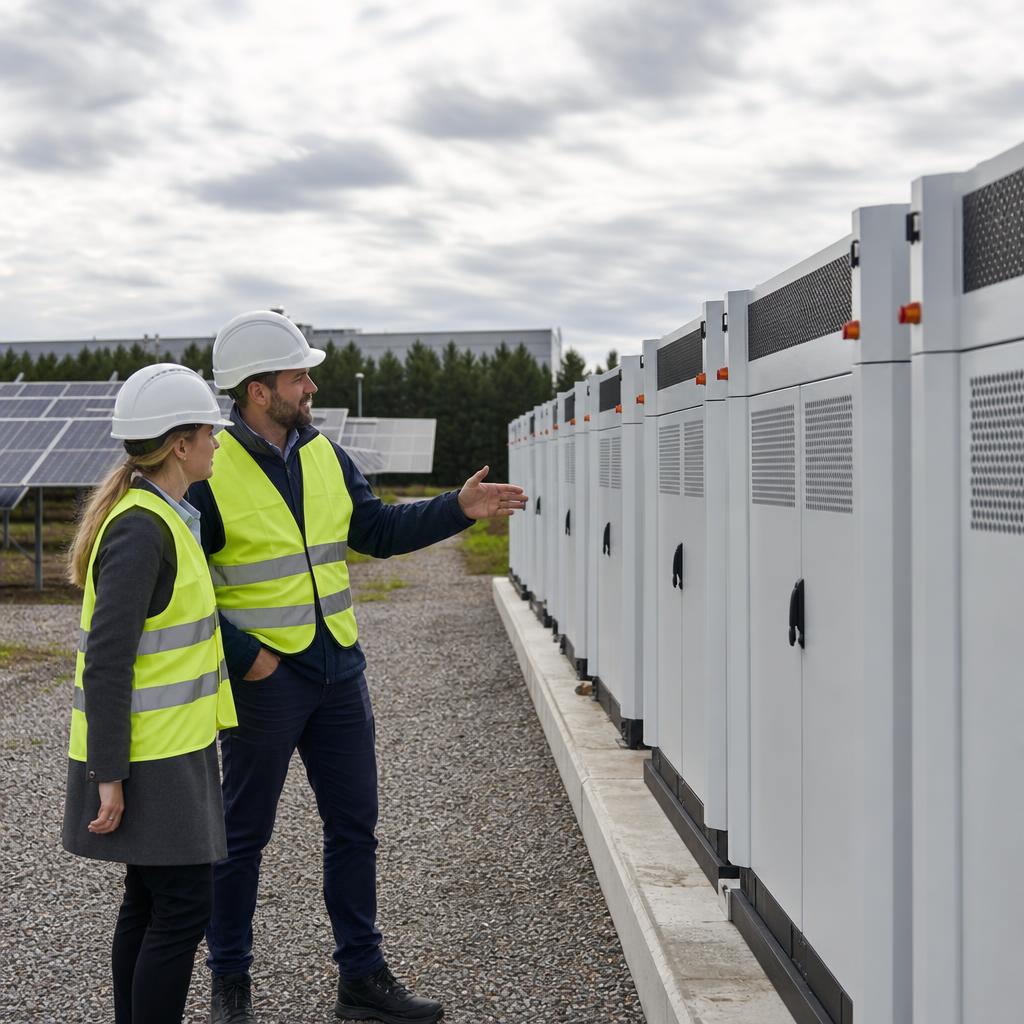
The operational implication is to integrate energy planning at the design stage. Generation, grid connection, storage, dispatchable support, cooling and energy-management software interact. Wind and solar can provide energy, but output varies; a plan must account for timing, forecasting, network limits, power quality and the facility’s demand profile. Cross-functional teams should align data-centre design, network planning, finance, procurement and operations around load assumptions, resilience needs, commissioning sequence and evidence for renewable sourcing. Batteries can shift some electricity and provide flexibility, but cannot alone guarantee continuous supply or replace all network investment.
Martin also addressed energy independence. Ireland’s domestic wind and solar resources can reduce exposure to imported fossil fuels, price shocks and supply disruption. Independence does not mean leaving electricity markets or interconnection; it means developing domestic renewable generation, storage, grid capacity and flexible demand to capture more local energy value and rely less on imported fuel for security. Businesses should evaluate energy choices for resilience as well as emissions objectives.
AI may help operate the more variable power system. Short-term forecasts of wind, solar, demand and congestion can inform operators and asset owners; equipment analysis can expose performance patterns; and improved controls may support battery dispatch or shift flexible consumption towards renewable-rich periods. These are possible applications, not guaranteed results. Data quality, integration, model performance, cyber security and authority to control equipment determine whether software adds operational value.
Energy-trading platforms can combine market prices, weather forecasts, asset availability, network constraints and contractual positions to inform when electricity is bought, sold, stored or consumed. The commercial aim is to coordinate assets and manage exposure while respecting the physical network, not simply automate trades. Developers, battery owners and major users should examine the platform’s data, operating permissions, risk controls and human oversight as carefully as its functionality.
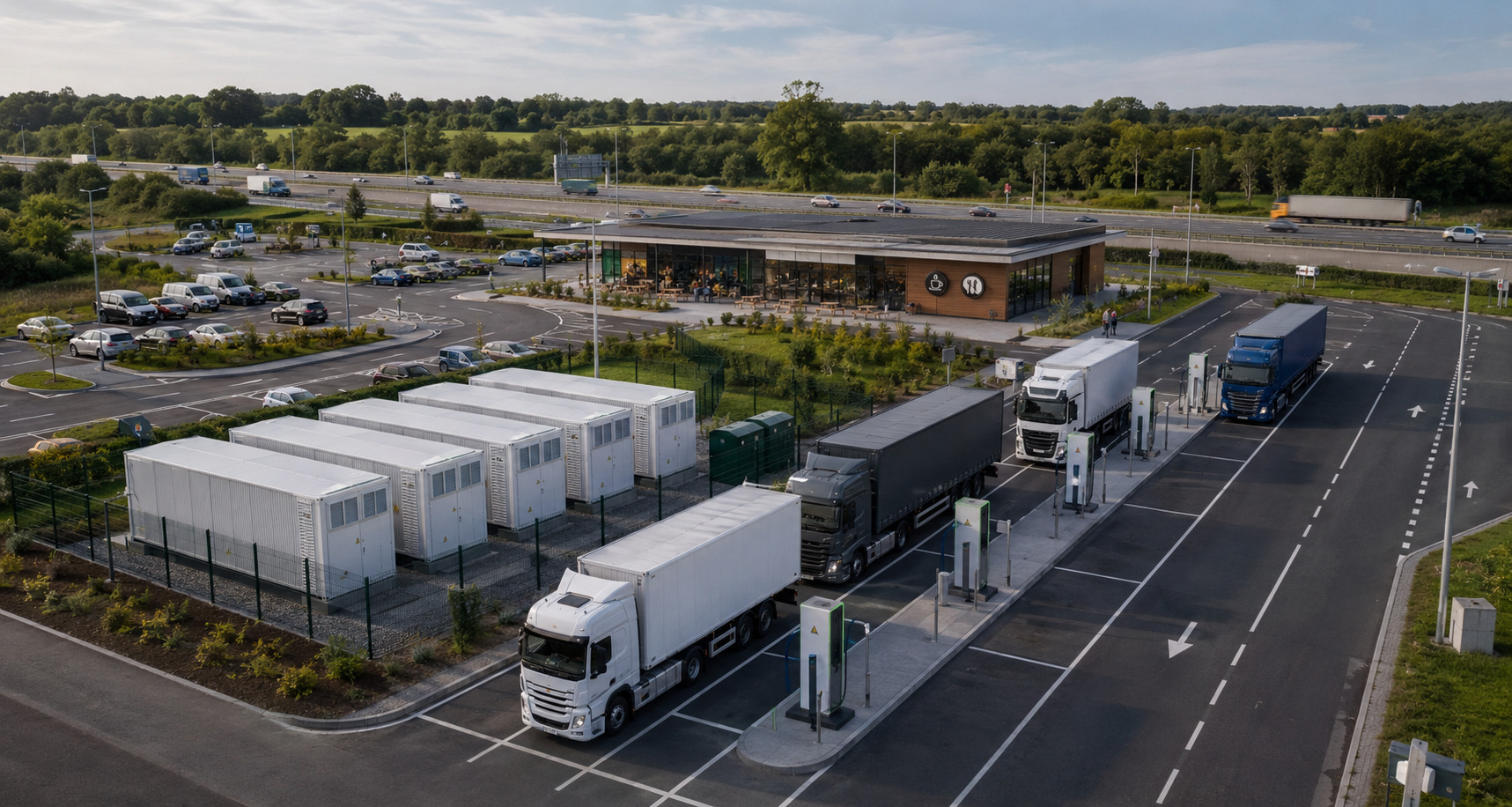
Virtual Power Plants (VPPs) can aggregate solar farms, batteries, EV chargers, flexible industrial loads and commercial buildings through software for balancing, reserve, congestion management or market participation where arrangements allow. Aggregation does not remove the individual assets’ connection limits, availability, control rights or market requirements. As more supply and demand sit at the grid edge, coordination may become valuable, but participation terms and dependable telemetry remain essential.
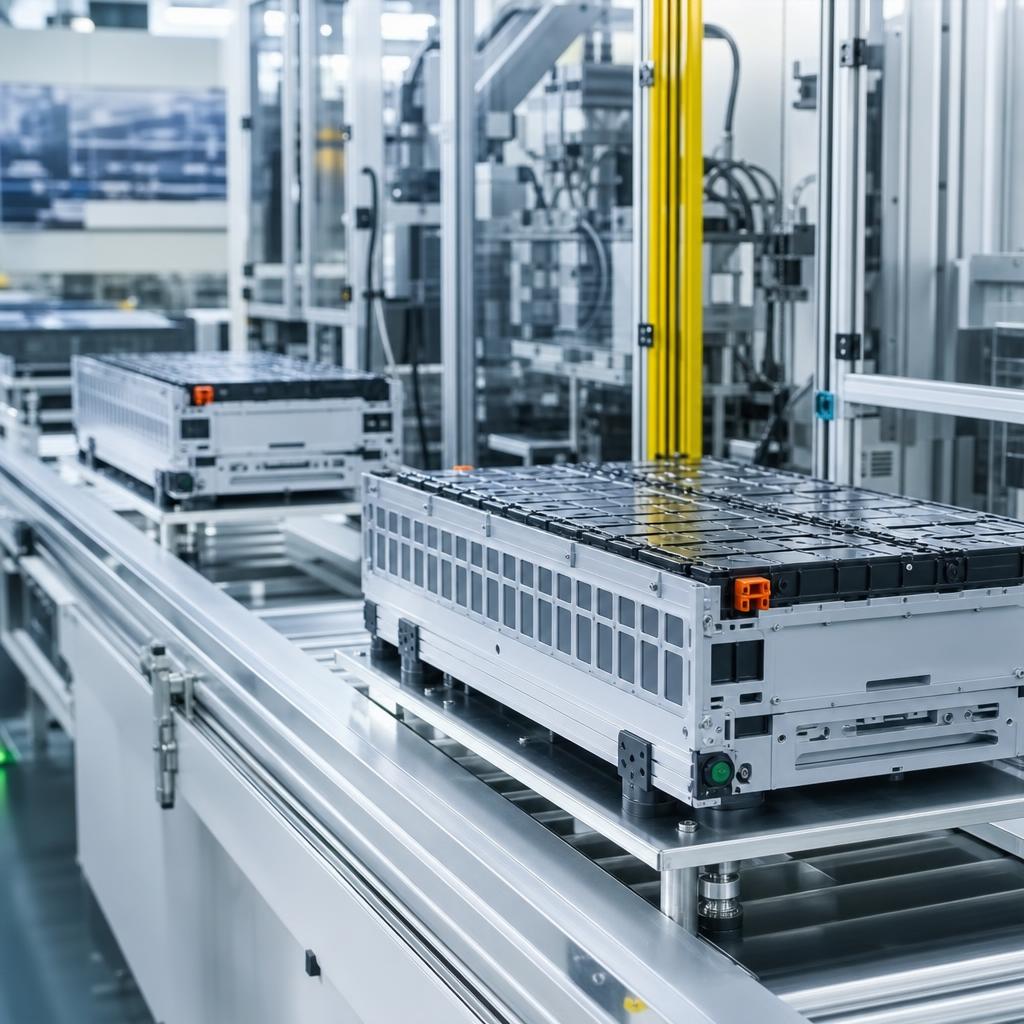
The international industrial context matters. Europe needs renewable generation, storage, power electronics, charging infrastructure, controls and grid equipment; China has substantial manufacturing and innovation capability in many of these areas. OGMA connects Chinese manufacturers, technology partners and engineering capability with projects and delivery partners worldwide. Its described role includes qualifying suppliers, translating requirements, structuring procurement and coordinating documentation and quality so equipment can move from factory to operation. Each project still needs evidence on specification, supplier, service and delivery; international sourcing is not a substitute for that scrutiny.
The executive agenda is practical: quantify demand and reliability requirements; establish the route to grid capacity and renewable supply; define what storage and flexible load must do; determine how software accesses data and controls assets; and assign performance, cyber and operational risks. For an Irish data-centre connection, assess the applicable CRU requirements and the evidence needed to meet them. Align procurement specifications and schedules with the energy plan instead of buying equipment in separate silos.
The presentation’s conclusion was that AI and renewable energy are interdependent. AI increases electricity demand, while analytical and control applications can make the system more flexible and efficient when implemented well. OGMA’s relevance is its position between digital energy requirements and manufacturing supply, linking project needs to international technology partners. The strategic opportunity should be grounded in grid reality, verifiable energy arrangements and accountable delivery: neither software nor renewable procurement alone resolves infrastructure constraints.
0 Comments