

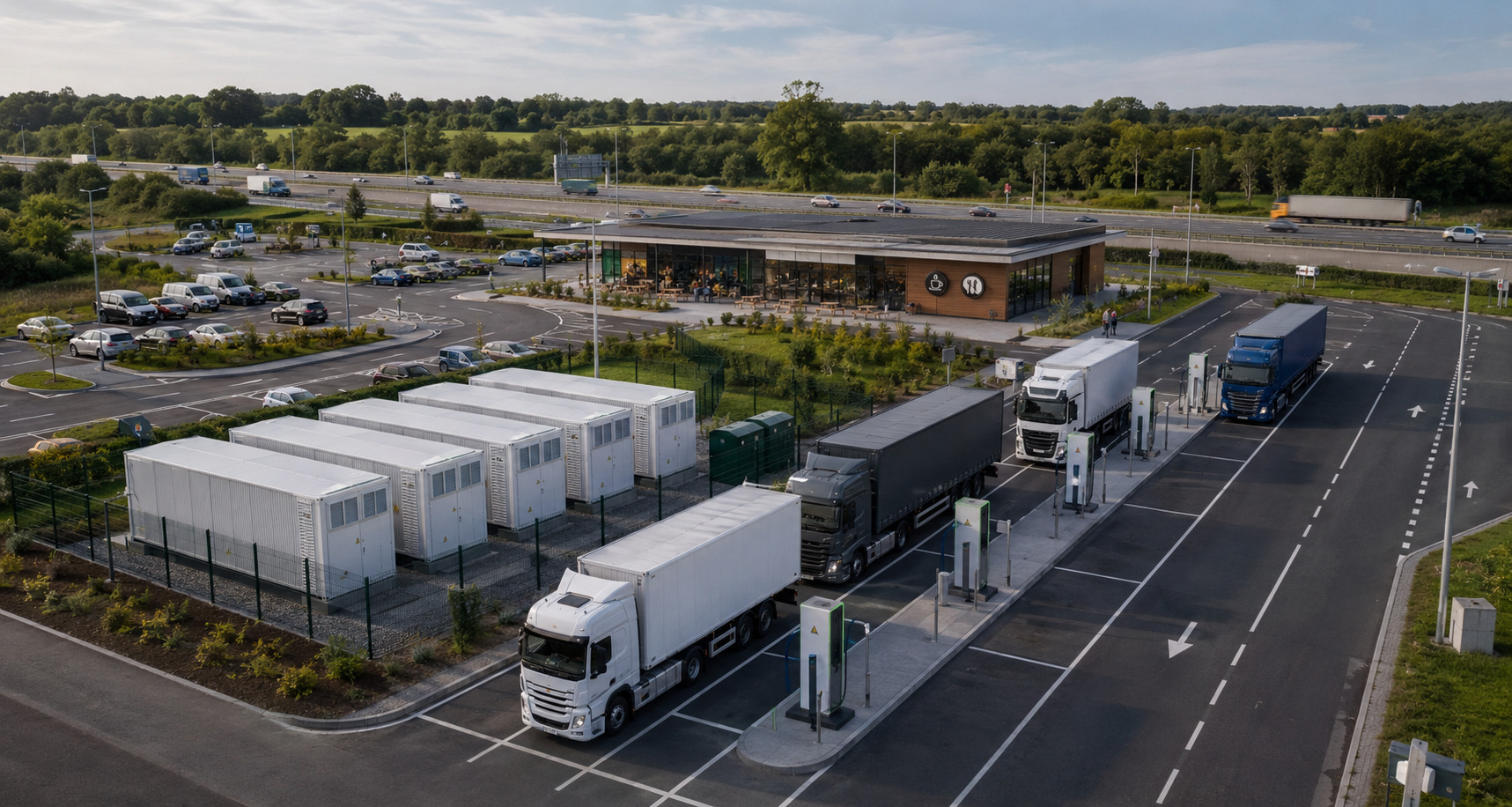
Heavy goods vehicle electrification depends on more than vehicle availability: it requires charging infrastructure designed around freight operations and the power system. HGVs have large batteries, operate on defined routes and face tightly scheduled turnaround windows. A depot or motorway site may also need to serve several vehicles at once, creating high and potentially concentrated demand. Energy parks can bring high-power charging, grid connection, on-site generation, storage, parking and driver facilities into a planned location. For executives, the strategic issue is how to develop the right sites and capacity without committing capital against untested assumptions about fleet demand.
OGMA is in talks with a major infrastructure provider about the creation of energy parks for the HGV industry. The original rationale is that capacity needs to be planned before fleets arrive; Ireland and other markets still have too few suitable high-power sites, and infrastructure availability is a constraint on the rollout of electric commercial vehicles. These discussions are not a completed project or a confirmed operating outcome. They point to the early coordination required among infrastructure providers, energy partners, landowners and freight operators if viable locations are to move from concept to development.
Site selection starts with logistics. A location needs to make sense in relation to freight corridors, depot patterns, journey lengths, vehicle dwell times, payloads and driver schedules. A charger that is technically powerful may still be commercially unhelpful if trucks cannot reach it when needed, if queuing disrupts operations, or if the dwell window is too short for the planned charge. Conversely, charger utilisation may be weak if the site is sized for demand that does not materialise. Operators should use real route and duty-cycle information, distinguishing committed fleet plans from longer-term expectations.
The electrical connection is a major planning dependency. Before selecting charger capacity, developers need to understand the site’s available grid capacity, connection process, potential reinforcement, programme and cost responsibilities. A phased connection may align investment with demand, but it must be engineered so later expansion is feasible and does not require avoidable redesign. Grid timelines and land control can be interdependent: securing a promising site without a credible connection pathway leaves a key risk unresolved, while waiting for complete certainty may mean losing a strategically useful location. The project should set evidence-based decision gates for spending on surveys, applications and design.
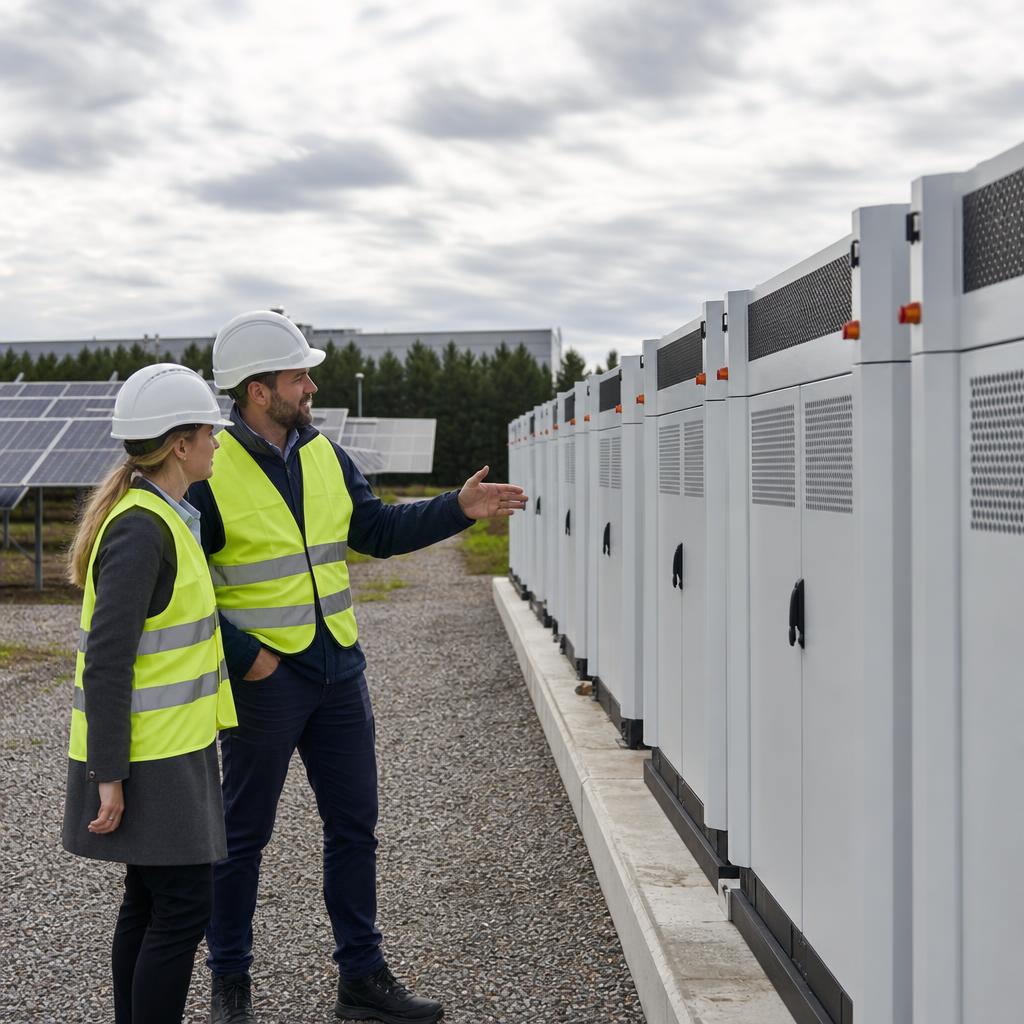
An energy park is an integrated operating site, not a row of chargers. Its design may coordinate high-power charging with battery storage, solar generation, backup generation, parking, access, lighting, security and driver amenities. Each element has different requirements for land, connection, safety, maintenance and control. On-site generation can contribute energy when available, while storage may help manage peaks or shift supply; neither removes the need to assess the connection and the site’s total load. Backup generation also introduces fuel, emissions, permitting and operating considerations that need to be explicit rather than treated as a generic resilience benefit.
Charging strategy should be derived from fleet requirements. Important inputs include vehicle battery capacity, typical daily energy use, route variability, charging windows, charging power limits, seasonal conditions and the proportion of vehicles expected to use the site. Operators should consider whether charging is scheduled overnight, during loading, between trips or during mandated breaks, without assuming that every vehicle follows an identical pattern. These details affect charger numbers, power ratings, layout, access management and energy procurement. The project should model several utilisation cases instead of relying on a single forecast.
Commercial structure is another unresolved design choice. Potential approaches may involve a fleet operator, site owner, charging provider, energy partner or infrastructure investor carrying different elements of development and operating risk. The parties should identify who funds land and connection works, owns the chargers, manages the site, buys electricity, sets access arrangements and bears utilisation or energy-price exposure. Any shared-site plan should account for priority access, queuing, payment, maintenance and service standards. The allocation must be clear before revenue assumptions are relied upon.
The principal trade-off is between acting early and preserving flexibility. Early land and grid work may secure options and shorten later development, but entails development expense before demand and connection outcomes are certain. Building the full anticipated capacity at once could leave equipment underused; phasing may reduce initial exposure but could increase later costs or constrain expansion if the design is not future-ready. A staged plan should identify what evidence justifies each investment step: customer commitments, route data, connection milestones, permits, supplier capability and an operating model that can support the site.
An executive checklist should include: map freight demand and routes; verify land access and expansion potential; obtain a credible grid assessment and programme; size chargers from fleet duty cycles; test utilisation and electricity-cost sensitivities; define interfaces among chargers, storage, generation and controls; identify permitting, safety and operating requirements; agree ownership and service responsibilities; and set development gates that limit irreversible spend. Procurement should qualify suppliers for technical fit, documentation, support and delivery capability, not merely headline charger ratings.
OGMA’s relevant contribution is cross-border procurement, project-development and supply-chain expertise in conversations around these sites. The infrastructure required for zero-emission HGVs will not appear through vehicle sales alone; it must be designed and delivered as part of the wider energy system. Practical progress depends on aligning location, grid, charging equipment and operating requirements early, while being transparent about what is still under discussion and what remains to be proven.

0 Comments