

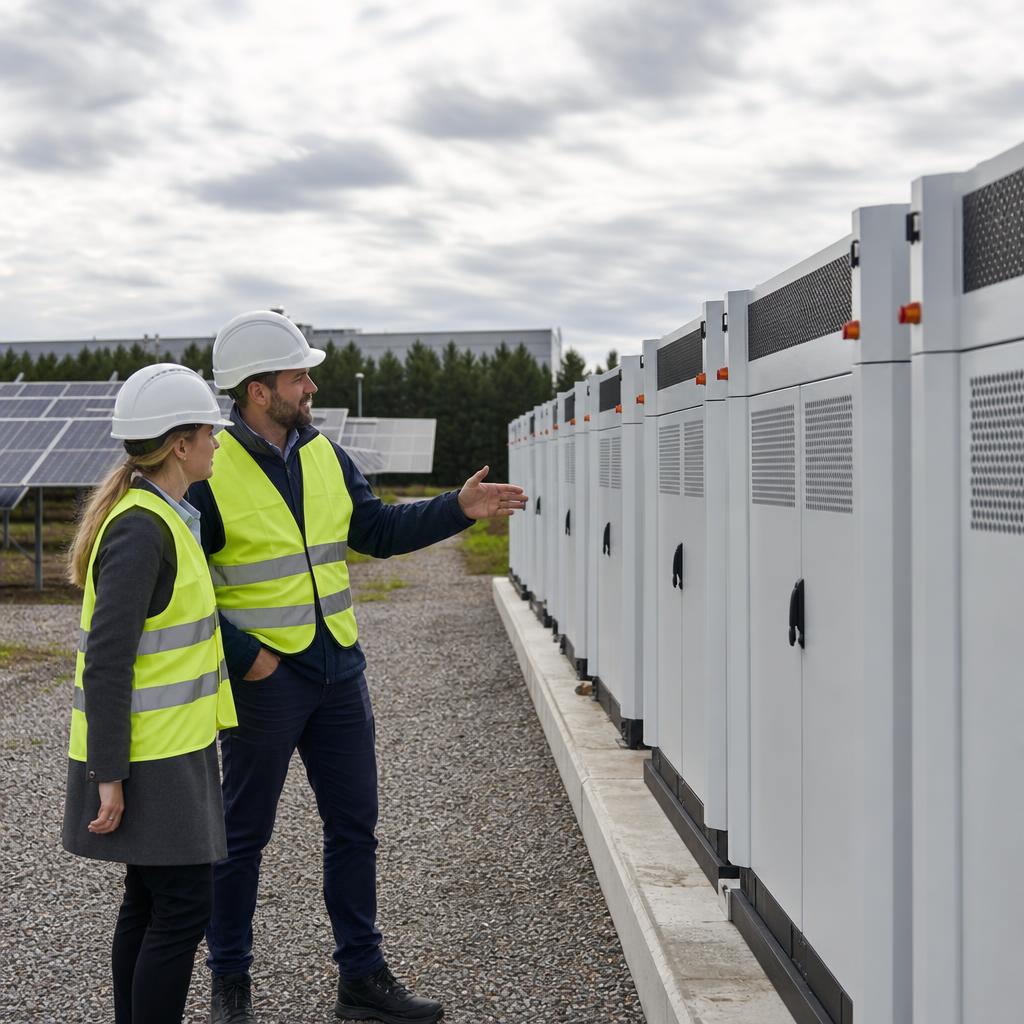
Commercial solar and battery storage should be procured as one operating system, not as unrelated equipment packages. Across Europe, renewable generation has expanded faster in some places than storage, flexible demand and grid infrastructure. Clean electricity can therefore be abundant when networks, demand or markets cannot absorb it. For commercial and industrial executives, the implication is practical: a battery is not valuable simply because a site has solar. The case depends on load, connection, tariff, operating objectives, equipment integration and lifecycle cost.
When flexibility is limited, renewable output may be curtailed, exported at low value or exposed to zero or negative wholesale prices. At other times, the system still needs generation, imports or demand reduction. A Battery Energy Storage System (BESS) can shift some energy between periods, provide certain grid services or help manage site demand; it cannot create electricity or replace every network reinforcement. Project teams should identify the specific constraint or cost they intend to address before choosing a system.
Spain provides a solar example: strong resources and photovoltaic generation can produce high output around midday. Where generation and imports exceed immediate demand or network capacity, prices can fall and output may be reduced. A suitably connected and operated battery could charge during high-production hours and discharge later, increasing the usable share of solar generation. Ireland illustrates a related challenge through wind: how much generation can be used depends on demand, transmission constraints, interconnector availability and the requirements of secure system operation. Storage may contribute to balancing, but location and connection terms determine which constraints and services it can actually address.
Potential applications include managing an export limit, reducing clipping or curtailment where design and connection allow, shaping deliveries under a power-purchase agreement, or increasing on-site use of rooftop or ground-mounted solar. Storing surplus may reduce later imports, but compare avoided retail cost with round-trip losses, degradation, operating costs and any export value forgone. These uses can compete for the same capacity; do not count every potential benefit as simultaneously available. A battery connected elsewhere cannot automatically relieve a local network bottleneck.
Design must distinguish power from energy. Power, measured in megawatts, is the rate at which a battery charges or discharges; energy, in megawatt-hours, is the amount stored. As an illustrative example, a 1 MW / 1 MWh battery could deliver 1 MW for roughly one hour before operating limits and losses. This is not equivalent to shifting a full day of surplus generation. Short-duration response, peak management and multi-hour shifting may require different configurations. Size both dimensions against interval demand, solar output, import and export limits, and the duration of the intended service.
Start procurement with site data: interval consumption, maximum demand, solar yield, tariff components, export conditions, outage requirements and any credible route to market. Decide whether the priority is self-consumption, peak reduction, export management, resilience, contracted dispatch or an external service, and rank those priorities. Clarify whether a third party has dispatch rights. A proposal based on rated capacity alone may not match actual operating needs.
Integration is as important as component selection. PV modules and inverters, battery racks, power-conversion systems, energy-management software, protection, metering, transformers, switchgear, fire-safety systems and monitoring need compatible specifications. The Energy Management System (EMS) must coordinate charging and discharging with site load, solar output and external instructions. Allocate responsibility for design, interfaces, commissioning, software support and fault resolution among suppliers and integrator. Otherwise, separate packages may be individually compliant but fail to perform together.
Model lifetime economics, not just initial savings. More frequent or deeper cycling may create value but consume warranty throughput and accelerate degradation; round-trip losses mean discharge energy is lower than charge energy. Include expected cycles, depth of discharge, efficiency, availability, capacity fade, augmentation and replacement exposure. Test downside cases for lower price spreads, reduced solar output, tariff changes, downtime and constrained dispatch. Avoid adding revenue streams that require the same capacity at the same time.
Resilience is a distinct requirement. A conventional grid-connected solar-and-battery system generally does not provide backup during an outage unless designed for islanded operation. Specify critical loads, duration, restart behaviour and transition between grid-connected and islanded modes. These requirements affect protection, switchgear, controls and sizing. Verify backup capability in design and acceptance testing rather than inferring it from the presence of a battery.
Before procurement, executives can request a concise decision pack: an interval-data-based use case; power and duration rationale; connection and export assessment; operating-priority schedule; comparable supplier scopes and warranties; degradation and augmentation assumptions; integration and commissioning responsibilities; safety, service and spares plans; and sensitivities showing which benefits survive less favourable conditions. Compare factory quality, certifications, firmware support and technical service alongside capital cost.
There is a trade-off between flexibility and certainty. A larger or more intensively dispatched battery may support more uses, but increases capital, operating complexity and lifecycle exposure. A narrow design may be simpler but leave opportunities unused. Prefer the configuration whose principal value case works without unsupported revenue stacking, whose warranty matches its dispatch and whose connection permits its intended operation.
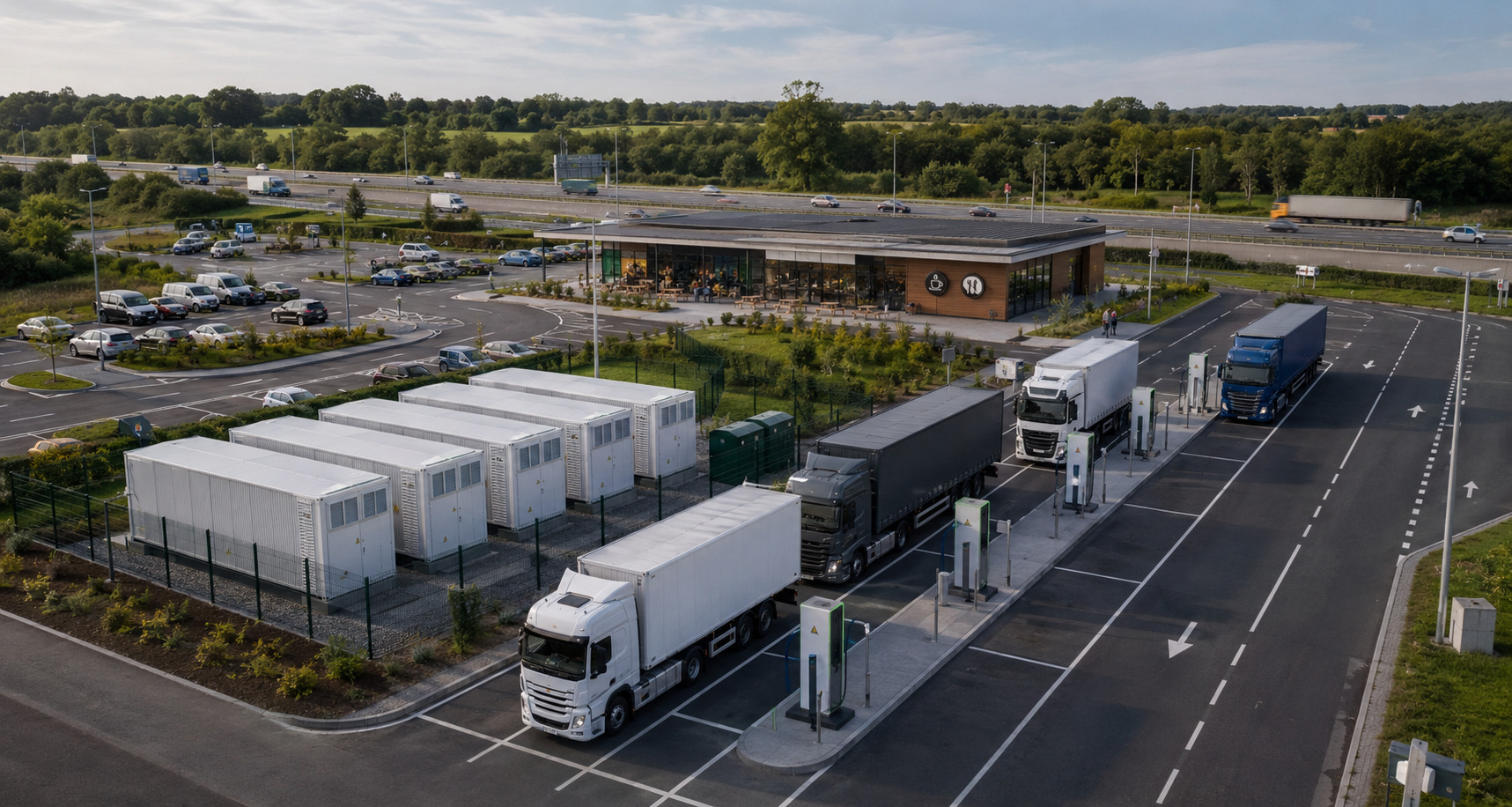
For Spain, Ireland and other renewable-rich markets, storage forms part of a wider need for stronger networks, interconnection, flexible demand and intelligent control. OGMA’s relevance is to connect project requirements with qualified equipment, coordinated procurement and delivery planning for the integrated system. The commercial case is strongest when generation, storage, controls and responsibilities are specified together, with expected performance grounded in the site’s actual constraints.

0 Comments