


The EU’s Net-Zero Industry Act (NZIA) signalled a strategic shift: clean-energy procurement would be judged not only on price and delivery, but increasingly on resilience, sustainability and the ability to evidence where critical products come from. For solar installers, developers and EPCs, this did not mean abandoning competitive global sourcing or assuming that every project was already subject to a new local-content rule. It meant treating supplier visibility as a commercial capability before policy and customer requirements became more demanding.
Adopted in 2024, the Act set a framework to strengthen Europe’s net-zero technology manufacturing ecosystem. It included a 2030 benchmark for European manufacturing capacity across relevant technologies, including solar, and provisions intended to simplify permitting and support strategic manufacturing projects. It also provided for resilience and sustainability considerations in certain public procurement and renewable-energy auction settings. The framework did not impose a blanket obligation on every private solar buyer to purchase EU-made equipment, nor instantly create sufficient European supply. Project teams should read the specific tender, auction, financing and contract requirements rather than treating policy direction as an immediate universal rule.
That creates a two-speed procurement challenge. Businesses still need modules, inverters, mounting systems and storage at viable prices and delivery dates. At the same time, customers, lenders and public-sector counterparties may ask for information about origin, sourcing, environmental performance or supply continuity. A quotation alone can create downstream cost if provenance is unclear, documentation unavailable or a specified criterion excludes the product from a procurement route.
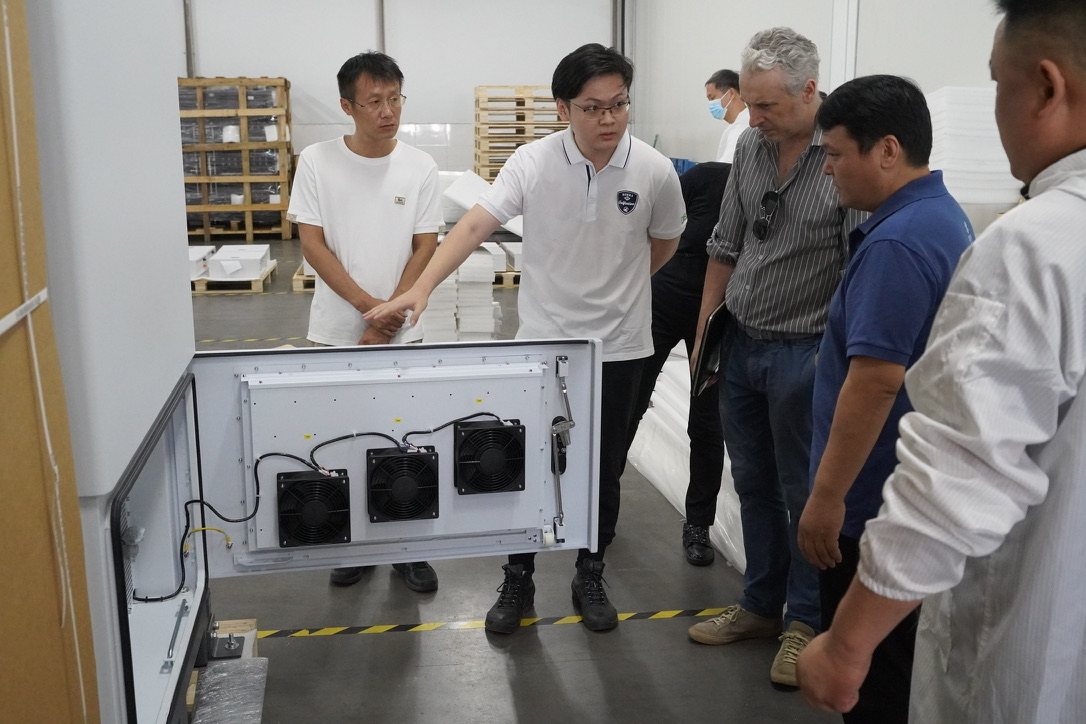
The operational response is to map the supply chain. Record the legal manufacturer and factory site, not only the brand. Identify principal component origins where available, distinguishing confirmed facts from unchecked supplier declarations. Capture relevant certifications, datasheets, warranties, quality evidence and factory-audit scope. For a tender or financing requirement, match evidence to its wording and assign responsibility for keeping it current.
Capacity claims need similar discipline. Nameplate capacity is not the same as uncommitted capacity for an order, or proof that a line can deliver the requested specification on time. Ask which factory will make the goods, whether its line is qualified, what slot is available, which inputs could constrain output and how changes will be communicated. Where subcontractors or multiple sites are involved, clarify their roles and whether a change of origin requires approval.
Better visibility can reduce schedule surprises, ease due diligence and support like-for-like comparison. It can also help answer client questions or meet tender criteria. It does not guarantee compliance, eligibility or uninterrupted supply. Documents may be incomplete, programme definitions differ, and capacity or ownership can change. Retain dated source documents and unresolved points; do not turn assumptions into claims.
Diversification can improve optionality if a factory is delayed or a product unavailable, but increases engineering, testing, logistics and quality-management work. Substituting a module or inverter can affect design, certification, warranties, monitoring and commissioning. A second source creates flexibility only if technically suitable, commercially available and approved in advance. Define acceptable equivalents and the approval path rather than relying on an informal promise.
A board-level review can ask: Which items are single-sourced or long-lead? What evidence supports declared manufacturer, factory and origin? Which customer, lender, procurement or auction conditions apply? Are capacity and production slots confirmed, and how are changes escalated? What would switching require for design, warranty and certification? Who will close documentation gaps? Diligence should be proportionate to project value and risk, but every material assumption needs support.
The Act’s direction is an invitation to improve procurement information, not to overstate what law requires today. Businesses able to explain sourcing choices with evidence are better placed to balance cost, timing, resilience and project criteria. This aligns with OGMA’s work identifying manufacturers, assessing factory capability and documentation, and coordinating equipment procurement. The objective is dependable supply supported by verifiable information and flexibility for each project.

0 Comments