

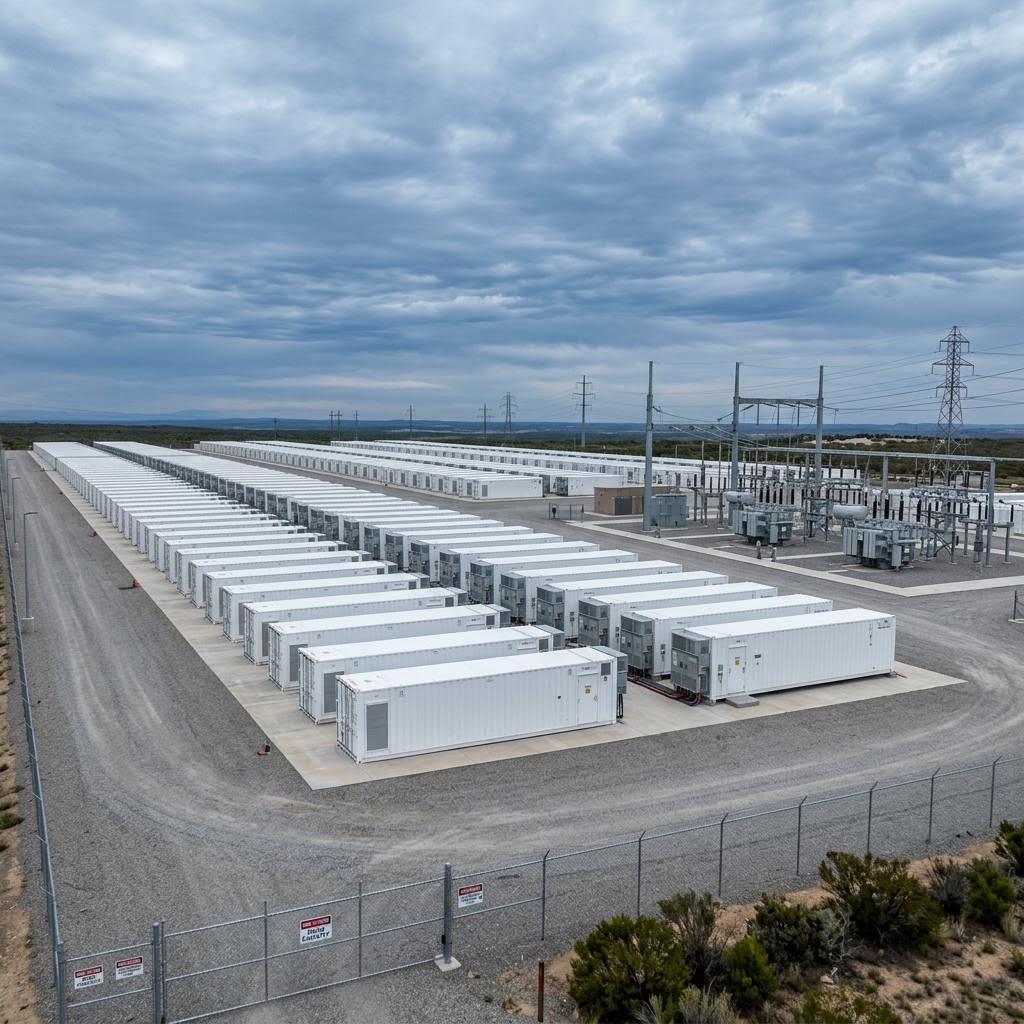
By April 2024, longer periods of low or negative wholesale pricing were making the commercial value of solar generation more dependent on when electricity could be used, shifted or curtailed. The strategic issue for developers was no longer simply how many megawatts could be built: it was how a project would earn value when generation coincided with abundant supply and weak prices. Across the EU and UK, that put batteries, demand response and smarter controls more firmly into planning and procurement discussions, while making clear that flexibility is an investment decision rather than an automatic hedge.
A negative wholesale price means that the market price for electricity is below zero for a given interval. It does not mean that every generator receives or pays the same amount: the effect on an asset depends on its route to market, contract structure, support arrangements, imbalance exposure and operational decisions. A project should model the price it actually captures, including relevant charges and contractual treatment, rather than assume that a published wholesale price directly equals its revenue. The timing, duration and frequency of low-price intervals matter as well as the headline depth of any one event.
Solar output is concentrated in daylight hours and can be correlated across many generators. As solar capacity grows, high production at similar times can put pressure on prices during those periods. The issue is a possible source of revenue volatility and capture-price risk, not proof that a particular project will be unprofitable. Location, grid constraints, system demand, storage, interconnection, generation mix and contracting all affect the realised result. Financial models should test a range of price shapes and curtailment assumptions and explain which parts are based on observable data versus an uncertain forward view.
A battery can shift some energy from a lower-value period to a later period, but the financial case depends on more than the purchase price of storage. Round-trip efficiency means some energy is lost in charging and discharging; operating limits constrain when and how often it can cycle; and grid connection, site layout, controls, warranty terms and degradation influence lifetime performance. A battery may also earn value through services other than energy arbitrage, subject to market access and the system’s technical capability. Revenue streams should not be added together without checking whether their operating requirements conflict.
Demand response is a different form of flexibility. A commercial or industrial customer may move consumption, reduce demand or schedule a process differently in response to price or system conditions. The feasibility depends on the process, production commitments, metering, controls, customer incentives and the value of any disruption. Some loads are flexible for a short interval but not repeatedly or at any time. A project’s demand-response case should be grounded in operating data and the customer’s actual ability to change consumption, rather than a theoretical maximum load.
Smarter controls can improve coordination between generation, storage and flexible load. An energy-management system may use forecasts, price signals and equipment status to select an operating schedule. Its value depends on forecast quality, communications, integration, data access and whether the owner or a third party is authorised to dispatch the assets. Buyers should establish how decisions are made, how the system behaves when forecasts or communications fail, and how outcomes can be audited. A more automated platform can create value, but it also creates dependencies that need service and cybersecurity consideration.
The project-level choices have different trade-offs. Curtailment may sacrifice output but avoid operating when the price or contract treatment makes generation uneconomic; whether this is possible and beneficial depends on settlement and contractual conditions. Oversizing a system can increase annual generation but may expose a larger share of output to low-value intervals. Adding storage may improve temporal flexibility but adds capital expenditure, conversion losses and lifecycle obligations. A PPA can make some revenue more predictable, yet its profile, volume, shape and negative-price provisions must be examined carefully. No single option is universally preferable.
For procurement teams, the BESS platform should be assessed against intended operating cases, not only a nameplate-duration test. Confirm power and energy capability, usable operating range, efficiency assumptions, degradation and warranty conditions, dispatch limits, controls interfaces, grid compliance evidence, safety provisions, service arrangements and planned augmentation. Review the system’s ability to integrate with the generation plant and route-to-market provider. Ask suppliers to distinguish tested capability from projected market performance, and ensure that commercial models do not rely on unsupported guarantees.
Executives can improve decisions through a short checklist: obtain interval generation and consumption data where available; model market exposure and contractual treatment; test alternative price and curtailment cases; compare storage, demand-side flexibility and no-build options; identify grid and control constraints; check lifecycle cost and warranty alignment; and assign responsibility for forecasting, dispatch, imbalance and maintenance. Decisions should be revisited as project design, market access and commercial agreements develop, because equipment specifications and contracts can constrain later operating choices.
The implication is not that every solar project needs a battery. It is that generation value should be evaluated in time as well as in volume, and that flexibility options should be compared against the asset’s actual commercial and operational context. OGMA’s relevance, where a client needs it, is helping assess BESS equipment, manufacturers and procurement requirements against the intended use case. A credible strategy links market assumptions to system capability, delivery evidence and lifecycle support.

0 Comments