

Europe is building battery-energy-storage projects at speed, while much of the industrial base remains concentrated in Asia and particularly China. Dependence is not absolute: Europe has cell factories, integrators and technology businesses. Yet European projects may rely on Chinese manufacturing, materials, components or supplier decisions at several points. Executives should treat this as a supply-chain exposure to manage—not as a reason to reject Chinese equipment automatically or accept a quotation without scrutiny.
The International Energy Agency reported that in 2025 China accounted for more than 80% of global battery-cell production, approximately 85% of cathode-active-material production and more than 90% of anode-active-material production. Chinese producers represented over half of the European Union battery market, almost twice their share in 2023. Even European battery factories continued to import much of their component supply, predominantly from China. These figures describe concentrated manufacturing capability; they do not establish that a particular supplier is suitable or that a disruption is inevitable.
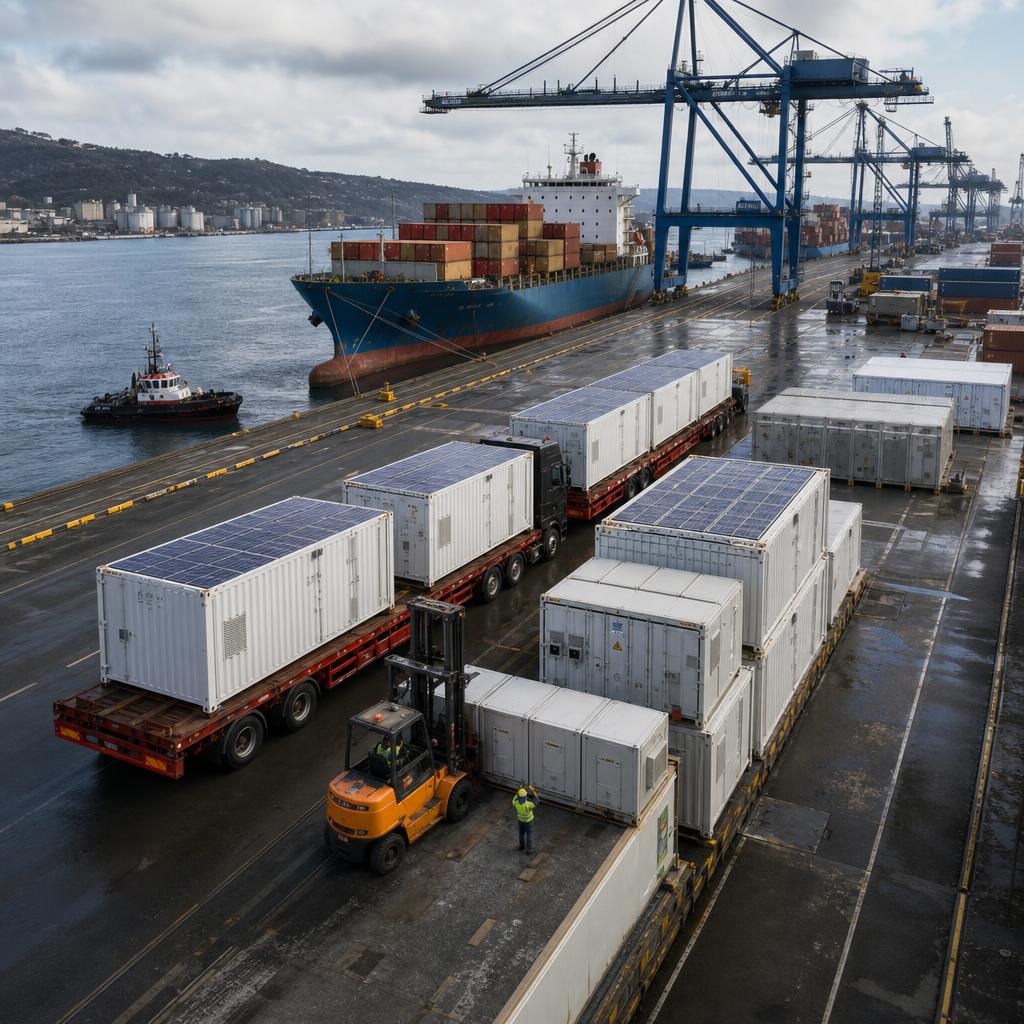
In stationary storage, the chain spans lithium iron phosphate cells, modules, racks, battery-management systems, enclosures, liquid cooling, power conversion and containerised systems. Domestic demand, supplier clusters, specialised labour, automation and close links between cell makers and integrators support scale, product iteration and price competition. This can give European developers access to capable equipment. It also means they must assess long-distance logistics, overseas service and entities operating across jurisdictions. The strategic trade-off is competitive access against dependency and controllability.
Bankability starts with the organisations behind the product. Establish who manufactures the cells, integrates the system and fulfils the order, and which legal entity stands behind each warranty. Investors, lenders and insurers need evidence of operating history, capacity, financial strength, quality systems, safety testing, certifications, references and complete documentation. Brand recognition can inform screening but cannot replace project-specific due diligence on the factory, product, contract and operating profile.
Read a BESS warranty as an operating obligation, not a headline. Capacity retention depends on cycle count, depth of discharge, temperature, state of charge, charge and discharge rate and control strategy. Availability commitments may exclude grid outages, communication problems or delayed access. Define measurement methods, maintenance duties, exclusions, response times, augmentation obligations and remedies for underperformance. A long warranty term has limited value if the performance test or enforceable remedy is unclear.
Service affects both availability and revenue. Specify spare parts, remote diagnostics, trained technicians, firmware support, escalation and root-cause investigation. Verify which named organisation provides service, response times, inventory and commercial responsibility. Where cell maker, integrator and EPC are separate, assign who diagnoses a fault, supplies parts and bears cost; otherwise disputes can delay recovery. Retain serial numbers, commissioning records, test results and operating evidence to support future claims.
Procurement should compare total delivered and supported cost: cells, integration, power conversion, transformers, shipping, duties, insurance, commissioning, local compliance, spares, augmentation and service. A low factory-gate price may be offset by missing documents, grid-compliance redesign, delay or a warranty claim difficult to resolve across borders. Test reasonable delivery and operating contingencies alongside the expected case; do not present scenarios as guaranteed outcomes.
OGMA has operated from China for 20 years, building manufacturing relationships and local knowledge. Its presence enables access to factory owners, engineers and commercial decision-makers, and can help compare tender commitments with production activity. For suitable projects, OGMA can negotiate preferred pricing, production allocation, inspection rights, documentation commitments, spares and project-specific guarantees. These protections are not generic: they depend on volume, specification, programme, supplier capability and lender or investor requirements, and must be agreed for the project.
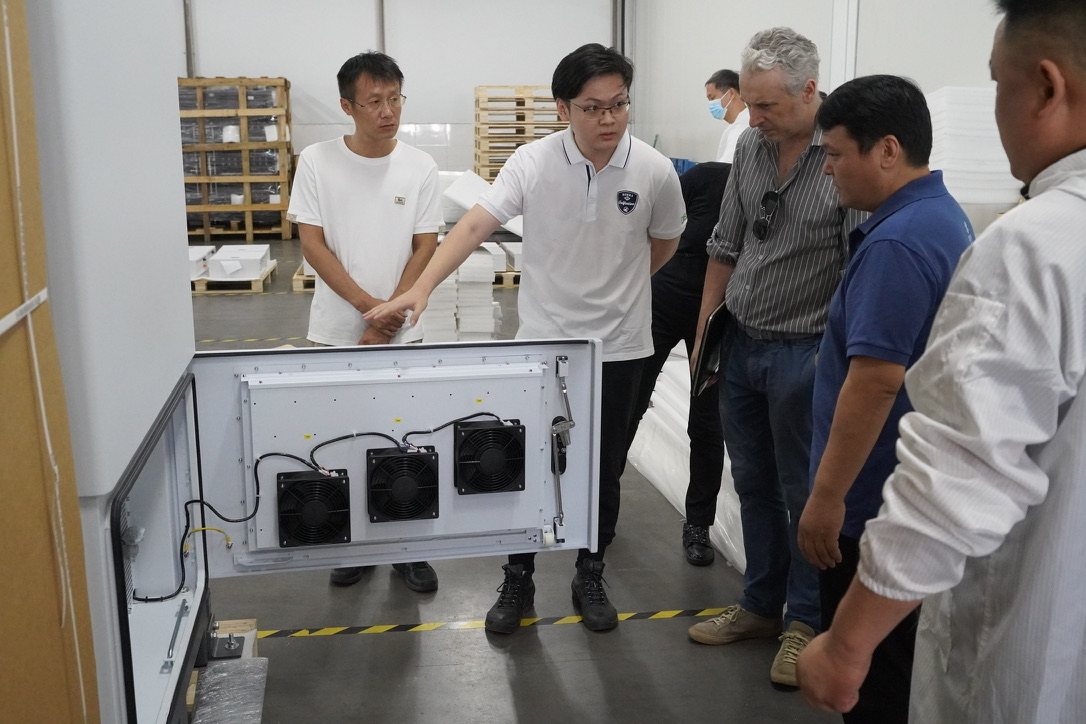
OGMA’s work can include supplier screening, factory audits, engineering coordination, document review, quality plans, production monitoring, witness testing, logistics and warranty negotiation. The practical purpose is to check that the approved bill of materials is followed, quality records are traceable and design changes are communicated before they create site problems. A supplier may focus on factory acceptance and shipment; the owner also needs equipment that can be commissioned in its market, meet the applicable grid code and receive support over its operating life.
The same connection can matter after delivery. OGMA can coordinate technical escalation, warranty evidence and access to parts or engineering input, especially where responsibility spans several organisations. This support can make a service route more usable, but does not replace contract remedies or local operating arrangements. Define those responsibilities before an issue occurs.
Europe is seeking more domestic battery capacity and diversified critical-material supply, but buyers cannot assume that alternatives already cover the entire chain. The practical board decision is how to balance competitive access against concentration, quality, performance, service and contract risk. Map critical dependencies, qualify each supplier, secure enforceable terms, monitor production and confirm long-term support. OGMA’s relevance is its position between international projects and Chinese manufacturing, helping clients coordinate technical and commercial work while protecting attention to bankability, quality, warranty enforcement and service.
For procurement and project leaders, the checklist is direct: identify critical components and manufacturing entities; verify factory and product evidence; test delivered-cost and schedule assumptions; define warranty measurement, exclusions and remedies; confirm spares and service; and maintain oversight from order through operation. These measures do not eliminate dependence, but make its risks visible and manageable while Europe’s supply base continues to develop.

0 Comments