

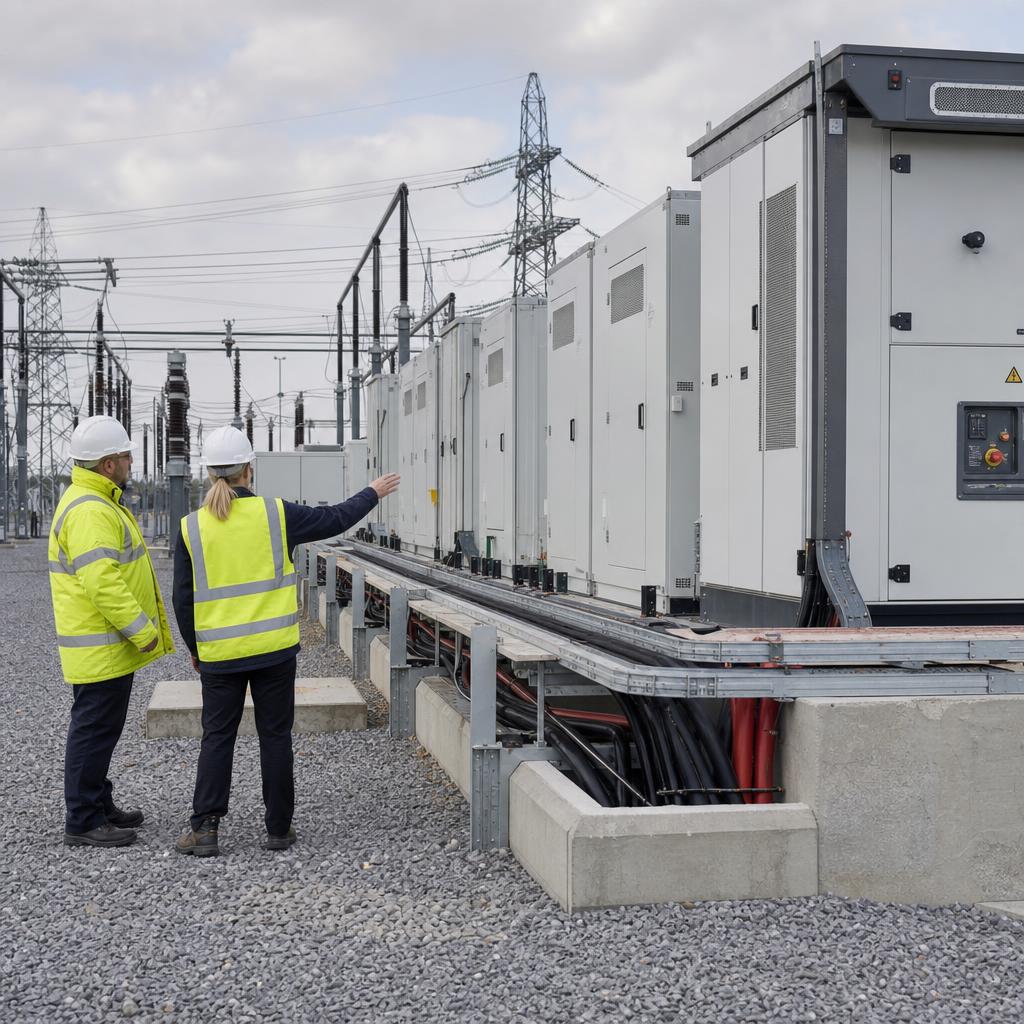
A grid connection date is an important project milestone, but it does not automatically align the delivery of every component needed to energise a battery energy storage system. Transformers, switchgear, power-conversion system (PCS) units and fire systems each have their own specification, manufacturing and delivery dependencies. Any one of them can become the item that moves commissioning. The executive implication is straightforward: the connection programme and equipment schedule must be developed together, early enough to expose interfaces and long-lead risks before the purchase order becomes urgent.
The first step is to establish a coordinated basis of design. The project’s connection requirements need to be translated into equipment ratings, protection, control, interface and performance requirements, with responsibilities assigned among the developer, network party, EPC contractor, integrator and equipment vendors. Design maturity should be visible: identify which assumptions are confirmed, which remain subject to network review and what changes would affect procurement. Buying too early against unstable requirements risks rework or a non-compliant item; waiting for absolute certainty can lose a manufacturing slot. Decision gates should state what information is sufficiently stable to place an order and who approves residual risk.
Switchgear and protection arrangements also demand coordinated review. The project should confirm which party defines and approves the relevant ratings, fault levels, protection settings and control interfaces, and ensure the vendor documentation arrives in time for engineering checks. The contractual boundary between network and customer equipment should be explicit. If the interface is unclear, responsibility for a missing component or late design revision may only emerge during installation. A responsibility matrix and document register can make those hand-offs visible before they become site issues.
The PCS must be considered as part of the connection and control system, not just a catalogue item. Its operating characteristics, communications, control modes and integration with the battery and energy-management system need review against the intended design. Vendor data, firmware and configuration assumptions should be controlled, especially where several suppliers contribute to the final system. A technically acceptable PCS in isolation may still require integration work if control interfaces or project requirements are not resolved early. Factory and site testing plans should confirm the behaviours that matter to the project, under agreed conditions and with the relevant parties present.
Alternatives can protect a programme, but they are useful only if pre-qualified. A substitute transformer, switchgear assembly or PCS may have different electrical characteristics, interfaces, documentation, footprint or approval requirements. Evaluate compatibility, connection acceptance, integration effort, warranty effects and any redesign before treating it as a schedule contingency. Maintaining a second approved option can reduce dependency, but it may add engineering cost or weaken purchasing leverage. The choice should be based on the probability and consequence of a supply interruption, not on the assumption that every alternate is interchangeable.
Commercial terms should address schedule risk in practical language. Check the definition of delivery, the date from which lead time runs, the information and approvals required from the buyer, inspection rights, treatment of changes and the remedies applicable to delay. Examine payment milestones against manufacturing progress and documentation. Align transport responsibilities, insurance, unloading and storage with site readiness. Equipment delivered too early can create storage, preservation and damage risks; equipment delivered late can leave an installation team or connection slot waiting. The overall plan should show who owns each risk rather than relying on broad statements of supplier support.
A useful executive checklist is: Is the connection programme reflected in the procurement baseline? Are the interface specifications sufficiently mature for orders? Which components have the longest or least certain lead times? What evidence supports each supplier date and production allocation? Are factory tests and document reviews scheduled? Is there a technically approved alternate for critical items? Are site, transport and storage arrangements compatible with delivery timing? Who decides on design changes, and who escalates a slip? What is the realistic consequence of each delay on energisation and commissioning? These questions surface manageable decisions before schedule pressure removes options.
There is a genuine timing trade-off. Early procurement can secure capacity and protect the schedule, but it exposes the buyer to design change, cancellation or storage risk. Later procurement preserves flexibility but can leave the project dependent on a supplier’s remaining production capacity. A disciplined gate—supported by a mature interface design, documented assumptions and explicit approval of residual exposure—is more defensible than either reflexively ordering early or waiting for every uncertainty to disappear. Schedule contingency should be visible and justified rather than concealed in optimistic lead-time assumptions.
For OGMA, the relevant work is helping clients assess manufacturers, equipment requirements, technical documentation and procurement timing. Bringing those considerations into the project schedule can help teams identify dependencies across transformers, switchgear, PCS and fire systems before urgency dictates a choice. Grid progress is meaningful only when the equipment and interfaces required to reach commissioning are planned against it. Early coordination cannot remove supply or network uncertainty, but it gives executives more time to choose how to manage it.


0 Comments