

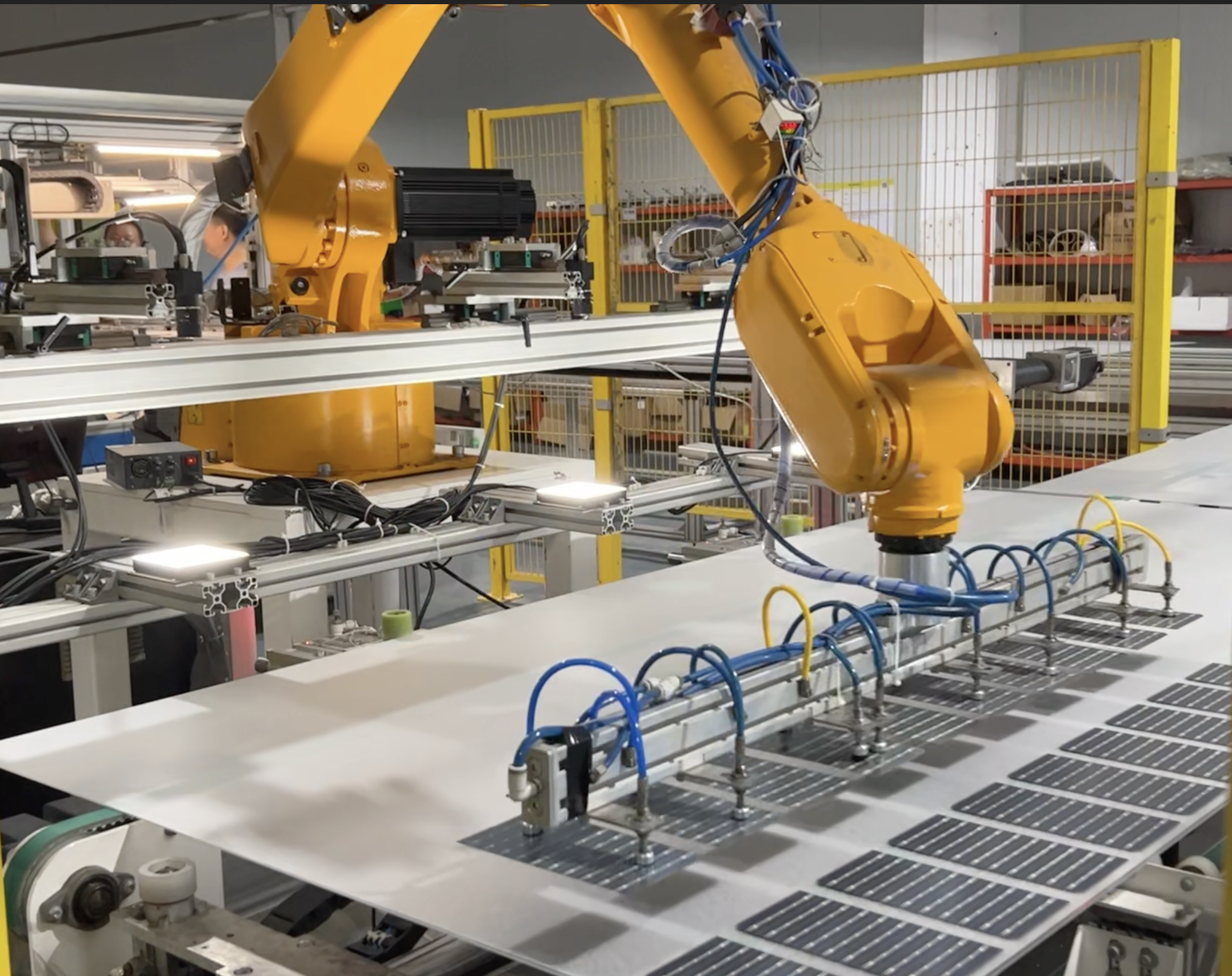
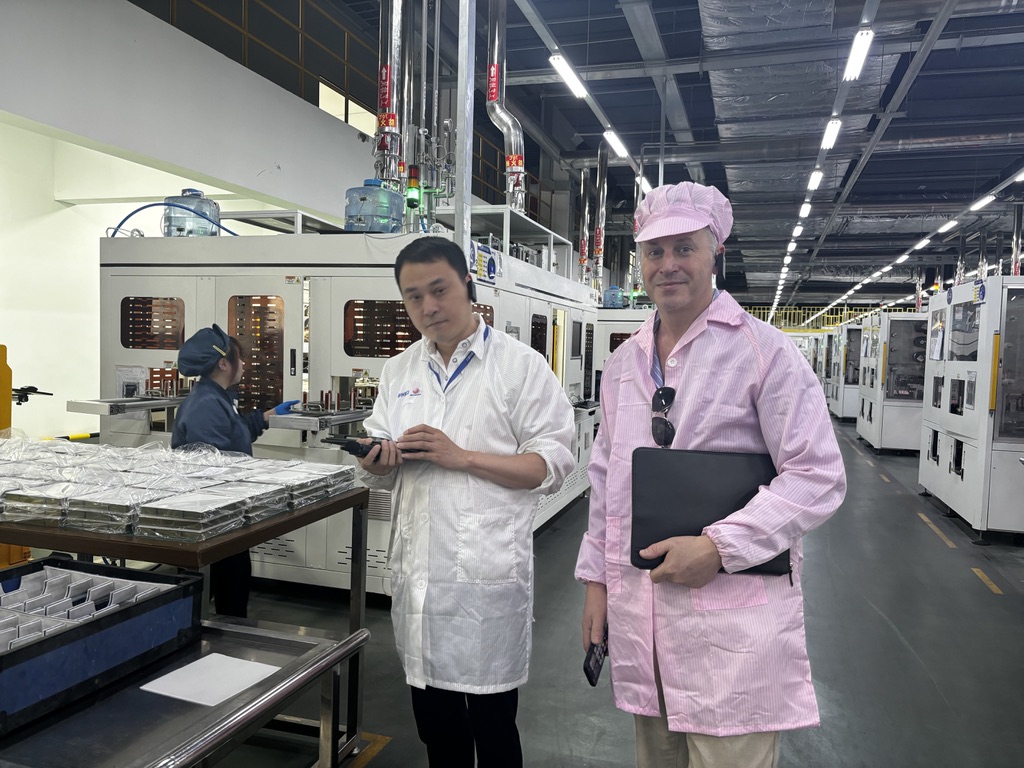
Automation is a strategic manufacturing capability, not a visual shorthand for a modern factory. During a July 2024 factory visit, OGMA saw robots handling delicate solar cells and components through controlled production stages, while engineers and operators monitored quality and managed exceptions. For buyers, the question is not how many robots a supplier has, but whether the line delivers repeatable, traceable output at the required quality and pace.
Solar cells are thin and fragile, and tight tolerances leave little room for inconsistent handling. Purpose-designed robotic grippers can lift and position cells repeatedly, reducing some risks of cracking, contamination and misalignment. This matters at high volumes and with larger or thinner formats. Stable handling may reduce rework, protect yield and make production easier to plan, but these are not automatic results. Line design, maintenance, calibration, incoming materials and defect measurement all affect performance.
Robotics can load and unload cells, align strings, transfer assemblies, place junction boxes, dispense adhesive, position frames and move modules between inspection and packing. Connected conveyors, curing equipment and test stations can reduce hand-offs and bottlenecks when the line is balanced. A fast station alone does not establish factory output. Buyers should ask for capacity, utilisation, changeover assumptions, yield and downtime evidence, distinguishing nameplate capability from sustained production of conforming modules.
A predictable cycle can support planning and may lower unit cost by spreading fixed costs across more acceptable output. Equipment data can help teams identify slowdowns and plan maintenance. The business case must also include capital expenditure, software integration, specialist maintenance, spare-parts dependencies and the possibility that another stage limits throughput. A lower factory cost does not necessarily mean a lower delivered cost if logistics, quality or warranty support are weaker.
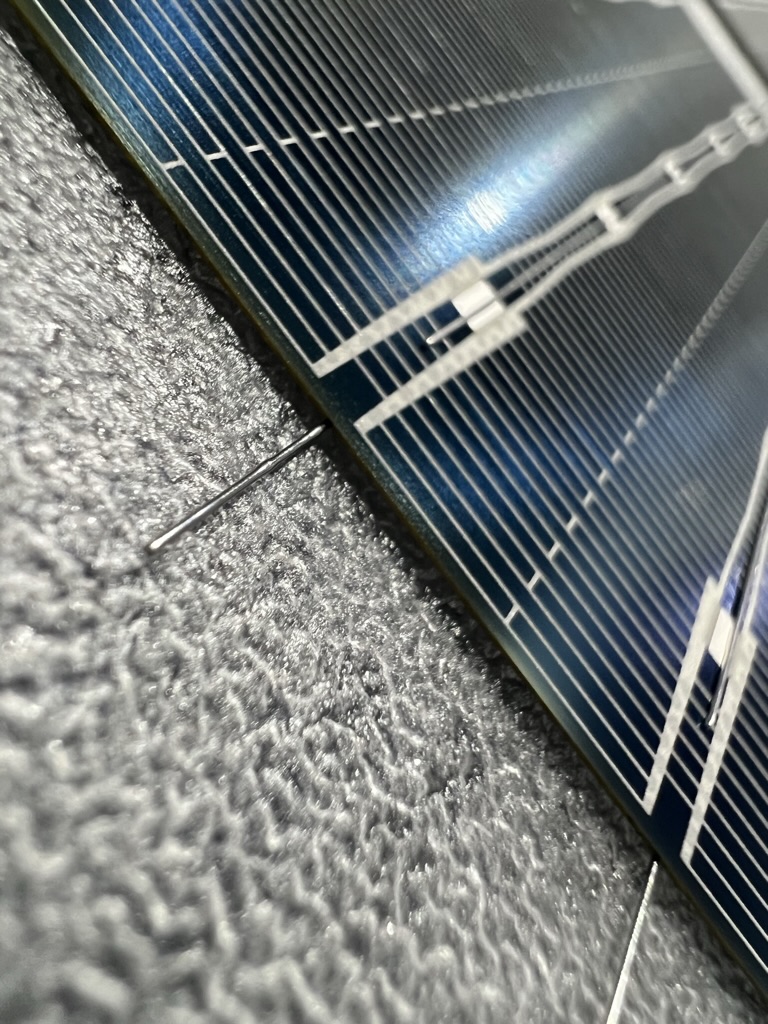
Automation can strengthen inspection. Cameras, sensors and machine vision support consistent checks, while optical and electroluminescence testing can help identify microcracks, broken fingers, soldering defects, contamination, mismatch and alignment problems. Electrical results and images may be linked to batches or serial numbers, supporting traceability and investigation. Buyers should confirm which records are kept, how thresholds are set, how long evidence is retained and how non-conforming output is isolated. An automated inspection claim is not a substitute for reviewing acceptance criteria and corrective action.
Inspection timing has commercial consequences. Finding a defect before lamination or final assembly can avoid committing more material and labour to a product that will not meet specification. Small defects can affect output or become more significant under thermal cycling and mechanical stress, although inspection cannot remove every latent risk. Procurement diligence should connect the factory’s controls to the module specification, sampling plan, test reports and warranty. Independent testing may supplement supplier evidence where appropriate; it is not a guarantee of future performance.
People remain essential. Engineers set process limits, maintain and calibrate equipment, interpret results and investigate recurring faults. Operators manage materials and changeovers and intervene when conditions fall outside normal parameters. Quality teams analyse trends and decide when changes are needed. Buyers should assess these capabilities and accountabilities, including training, shift coverage and escalation procedures, rather than infer quality from equipment alone.
Automation can magnify errors as readily as it improves consistency. Incorrect settings, software changes, poor calibration or defective incoming materials can reproduce a problem at scale. A line may also depend on specialist parts or services whose absence interrupts production. Qualification should examine maintenance schedules, calibration, alarm response, process-change control, spare-parts arrangements, inspection rules and corrective-action evidence. A factory visit should show normal operations, not only a prepared demonstration.
A practical review starts by defining module and quality requirements, identifying the actual site and line, and checking product and factory documentation. Buyers should review capacity, yield and traceability evidence; understand how defects are detected, segregated and corrected; and assess maintenance, continuity and escalation support. Record which claims have evidence, which remain supplier statements and what conditions would prompt further testing or another source. This gives technical, procurement and finance leaders a common basis for comparison.
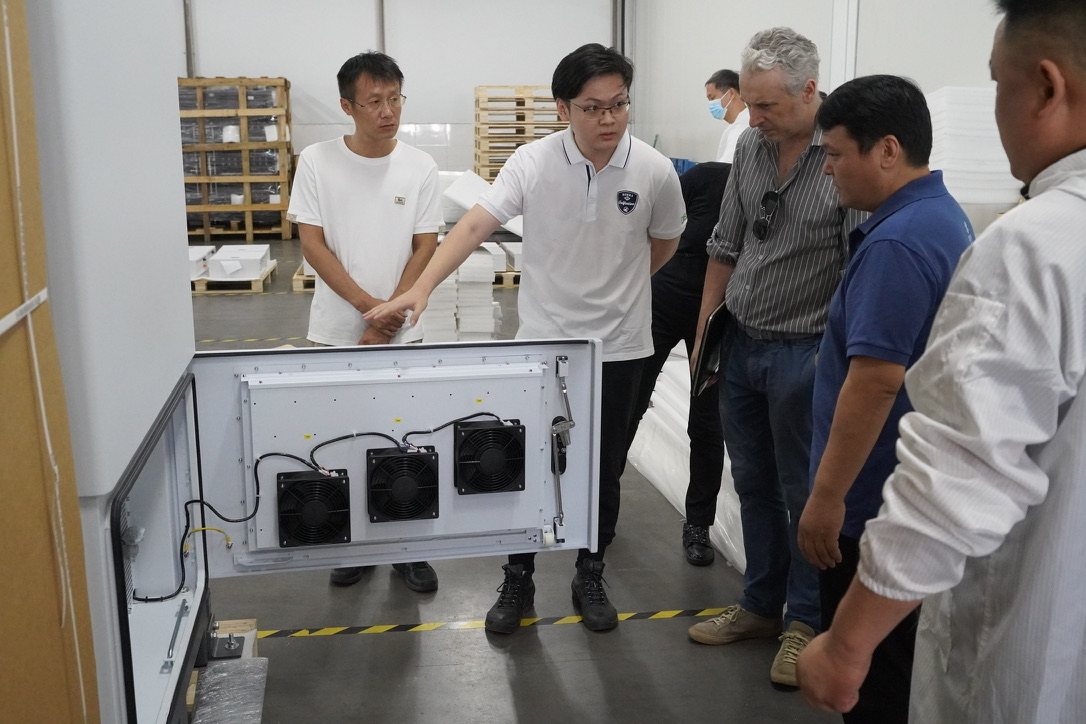
OGMA’s factory assessments connect client specifications with machinery, quality gates, materials and operating evidence at source. The team can review automated production and inspection, assess capability and coordinate independent testing where required. This helps compare suppliers on industrial discipline as well as price and nameplate performance; it does not replace project-specific acceptance or contracting.
Robotics can support throughput, lower waste, repeatability and stronger inspection, but results depend on equipment, people, data and supply support working together. Buyers should value evidence of consistent conforming output rather than automation as spectacle. That distinction helps identify suppliers able to scale dependable production while exposing delivery, quality and service risks before they reach a project.

0 Comments