

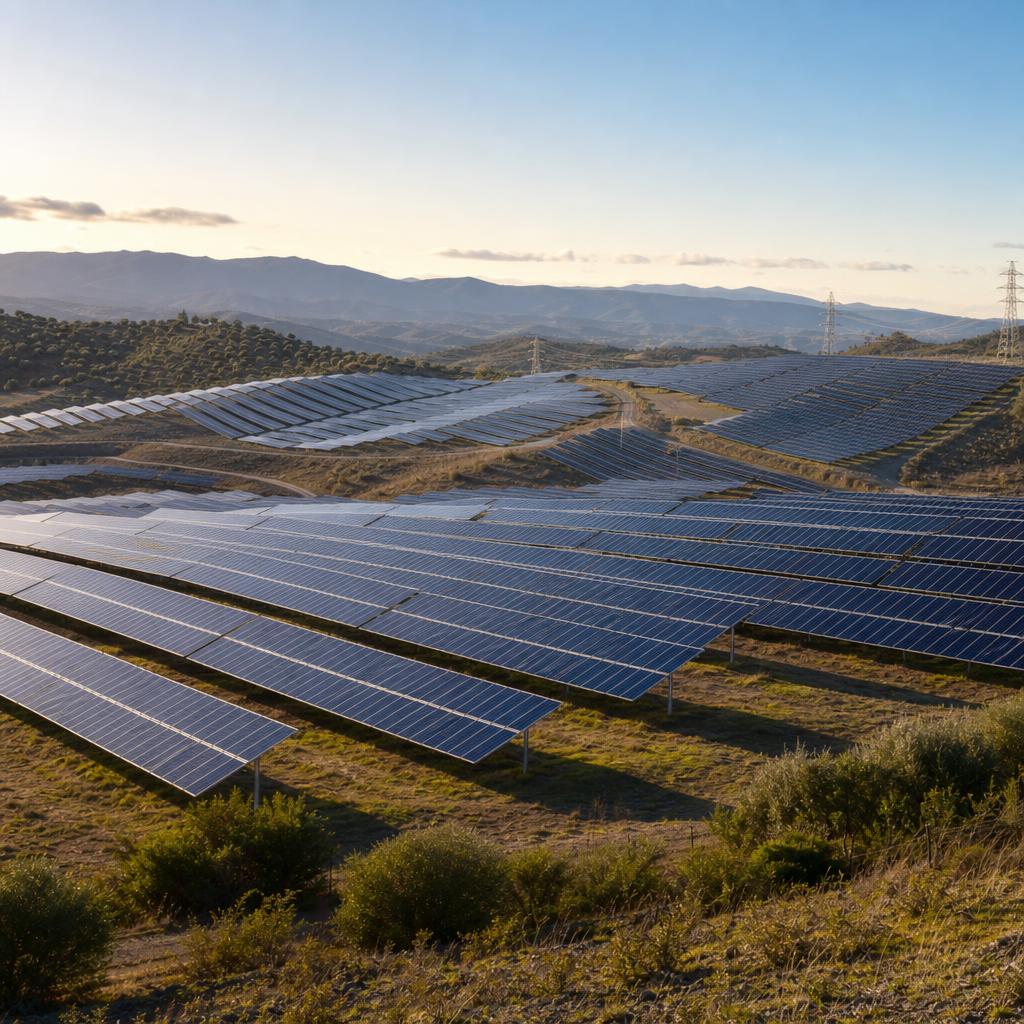
Financing a 100 MW solar farm in Ireland is staged, not a single cheque at the outset. Development capital is committed while land, planning, grid, construction and revenue risks remain unresolved. The aim is to spend in the right order, control a suitable site without necessarily buying it, and build evidence for investors and lenders before construction finance.
A project of this scale may require roughly 150 to 250 hectares, depending on layout, terrain, environmental constraints and whether storage is included. Solar exposure, ground conditions, road access and a viable network route matter. The nearest substation is not automatically the best connection point: capacity, reinforcement and programme may outweigh distance. Developers often use a land option giving the project a right to enter a long-term lease if planning, grid and finance conditions are met. It should allow surveys, cover cable routes and provide time for approvals and extensions.
A dedicated project company, or SPV, can hold land rights, planning, the grid offer, contracts and revenue, making project-level investment and lender diligence more straightforward. Early risk capital pays for surveys, environmental and grid studies, design, legal advice and the team. Development spending may reach several million euro before construction finance; it is exposed if planning is refused, the connection is unworkable or construction costs undermine viability.
Grid and planning work should proceed in parallel. The developer follows the relevant Irish connection process and meets its information, security and milestone requirements. An offer may specify connection point, works, cost allocation and programme, but the quoted charge is not the whole exposure: delays, reinforcement, cable works, curtailment assumptions and design changes can affect cost and timing. Assessment covers landscape, ecology, habitats, archaeology, drainage, flood risk, glint and glare, traffic, construction and decommissioning. Early community engagement and mitigation planning can help avoid restrictive conditions and unplanned costs.
The financial model needs conservative assumptions for generation, capital cost, operating expenses, debt, tax and revenue. Independent specialists typically review solar resource, losses, degradation and availability. As an illustration, a 100 MW Irish project might produce 90 to 110 gigawatt-hours in a representative year, although location, technology, layout, losses and curtailment affect output. An illustrative €70 million to €100 million or more capital requirement may include modules, structures, inverters, civil and balance-of-plant works, grid connection, development, finance, contingency and owner’s costs. Difficult ground, network works, a long cable route or batteries can raise it; a module quotation is only part of the budget.
Revenue structure influences debt capacity. Ireland’s Renewable Electricity Support Scheme is one possible route, subject to qualification and an auction award; a long-term corporate or utility power-purchase agreement is another. Merchant sales retain exposure to prices, solar capture rates, imbalance costs and curtailment, and usually support less debt than more predictable contracted revenue. The model should reflect the price the plant can capture, not just an annual wholesale average, and include route-to-market fees, losses, availability and negative-price exposure. A contracted base with limited merchant exposure is an option, not a guarantee against risk.
Once land, planning, grid and revenue are sufficiently established, the project can seek financial close. An illustrative structure might fund 65% to 75% of eligible cost with senior debt and the balance with equity; leverage depends on lender requirements, revenue certainty and construction risk. For an illustrative €85 million project, this implies roughly €55 million to €64 million debt and €21 million to €30 million equity. These are examples, not an offer or forecast. A developer may retain the asset, bring in an infrastructure investor or sell the SPV at a ready-to-build stage; investors may recognise documented development spending as sponsor equity.
Due diligence tests deliverability. Lenders and investors review title, land agreements, planning, grid rights, energy yield, environmental work, insurance, tax, models and contracts. EPC arrangements should allocate delay, performance and cost-overrun risks; suppliers are assessed for compliance, warranties, quality and financial strength. Funding is drawn against construction milestones, often with an independent technical adviser confirming progress. Contingency matters because ground conditions, weather, logistics, grid interfaces and commissioning can add costs.
In operation, the SPV pays market and balancing costs, rent, maintenance, insurance, grid charges, asset management and reserves before debt service; equity receives residual cash subject to lender tests. A simple illustration, not a promised return: 100 gigawatt-hours exported at an average net realised value of €70 per megawatt-hour would mean about €7 million gross revenue before operating costs, finance, tax and lifecycle spending. At €50 it would be €5 million; at €90, €9 million. Actual contracts and market performance determine returns. Modules degrade, inverters can fail, and vegetation, drainage and monitoring need ongoing budgets.
The sequence is to secure land under option, test the grid route, fund planning and environmental studies, build a bankable model, establish a route to market, negotiate contracts, complete diligence, finance, build, commission and manage the asset. OGMA can support equipment and supply-chain work through options assessment, manufacturer qualification, factory and document review, and procurement planning. This complements rather than replaces legal, engineering, market or financing advice. Bankability depends on credible rights and contracts, dependable equipment and a supportable plan—not simply land and permission.

0 Comments