

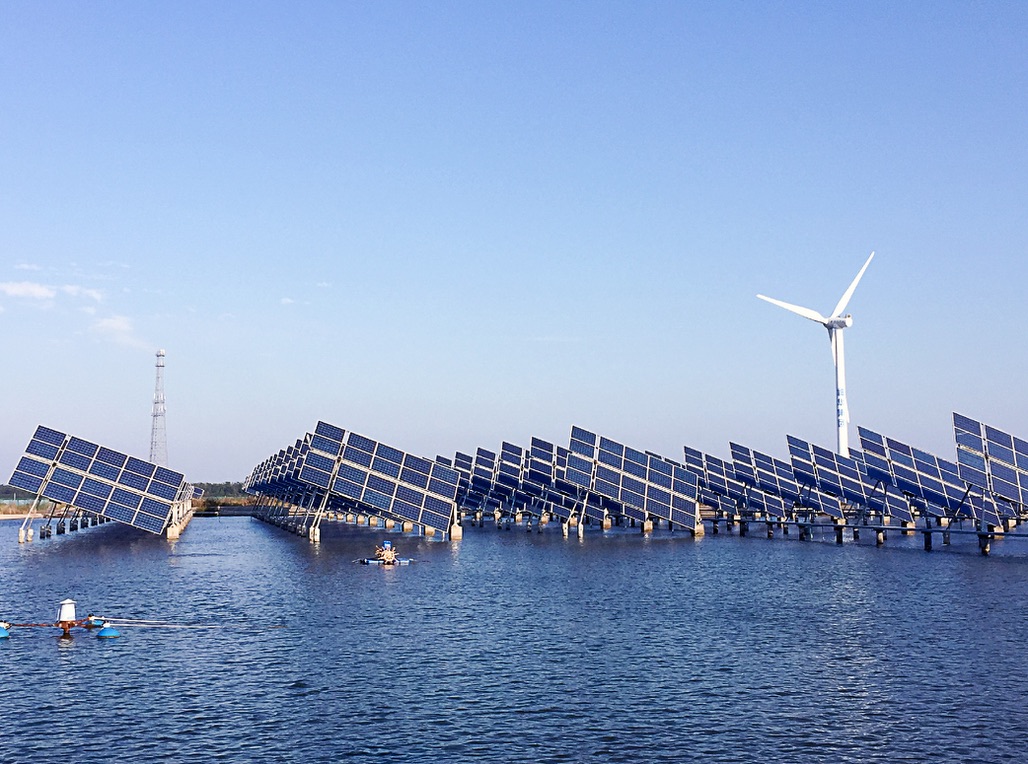
Solar at sea addresses a strategic constraint: coastal regions can have strong electricity demand and limited land, with housing, industry and nature competing for space. Photovoltaics on water could add generation near ports, cities and islands, but the investment case changes between a sheltered reservoir and exposed marine site. Treat it as site-specific infrastructure, not conventional solar transferred onto water. The question is whether space or shared infrastructure justifies additional engineering, operating and permitting burdens.
Floating platforms or fixed nearshore structures can create capacity without occupying valuable land. Water may moderate module temperature, but any yield advantage needs evidence for the design and site. Grid access, nearby demand, consent and ecological constraints can matter more than theoretical resource. Benefits such as supply diversification are not automatic: connection capacity, cost and delivered power profile still need assessment.
Co-location with offshore wind may improve use of export routes, substations, port facilities and operations. Different generation patterns could complement one another, but this varies by site and weather. Developers need correlated resource analysis and a joint connection model. Shared assets also create dependencies: outages, access restrictions or capacity limits may affect both technologies, so governance should be resolved early.
Marine conditions are the defining engineering difference. Waves, wind, tides, currents and storms impose repeated loads on modules, floats, frames, anchors and cables. Equipment proven on an inland lake cannot be assumed to survive offshore. Design must account for movement, extreme events and mechanical stress while protecting electrical connections. Independent engineering should test load cases, design life and failure modes before procurement.
Saltwater, humidity and biological growth add lifecycle risks. Corrosion can affect frames and connectors, water ingress threatens insulation, and marine growth can alter submerged components. Materials, coatings, seals and cable protection need evidence of suitability. Warranties should cover the intended environment and installation; general certification does not establish marine suitability.
Costs extend beyond modules and inverters. Projects may need specialist floats or foundations, moorings, marine-rated cables, vessels, port access, trained crews, surveys and insurance. Weather windows can delay construction and maintenance. A small failure may require costly vessel mobilisation. Schedules need realistic access and contingency assumptions.
Compare whole-life cost and value, not equipment price. Higher costs may be justified where land is constrained, a coastal load is difficult to serve or offshore infrastructure can genuinely be shared. Otherwise, rooftop or ground-mounted solar may be simpler and less expensive. Include connection, construction, operations, insurance, degradation, downtime, replacement and decommissioning, and identify cost uncertainty.
Permitting risks are material. Marine areas support navigation, fishing, tourism, cables, pipelines and sensitive habitats. Developers may need seabed rights, environmental assessment, navigational approvals, grid consent and consultation. Effects on wildlife, water quality, views and access require site-specific evidence. Early engagement can reveal constraints but cannot guarantee consent; identify relevant authorities and decision gates rather than assuming one approval covers all activities.
Bankability is difficult where long-term operating evidence is limited, especially for exposed installations. Lenders and insurers need evidence on structural survival, degradation, availability, repair and warranties. If components come from different suppliers, define design authority, interfaces, acceptance tests and defect responsibility. A pilot can reduce uncertainty, but a short demonstration cannot establish decades of performance.
Other risks include cable fatigue, storm damage, navigation hazards and difficult emergency access. Plan decommissioning from the outset, including recovery of floats, anchors, cables and damaged equipment. End-of-life work belongs in project economics.
A staged approach is prudent: screen sites and connections; measure marine conditions; assess ecology and user conflicts; develop a concept; obtain independent engineering review; and compare lifecycle cost with land-based alternatives. Pilots should test materials, electrical performance, moorings and maintenance over meaningful seasonal conditions. Procurement should allocate responsibility across marine and electrical systems and define management of changes and defects. Redesign or stop if risks cannot be bounded or value depends on optimistic assumptions.
OGMA can connect project requirements with qualified manufacturers and engineering partners, assess evidence and coordinate procurement. Solar at sea may suit coastal markets or offshore wind settings, but is not a universal substitute for land-based PV. Its potential depends on real location advantages, proven durability and lifecycle accountability.

0 Comments